
By Lehlohonolo Lehana.
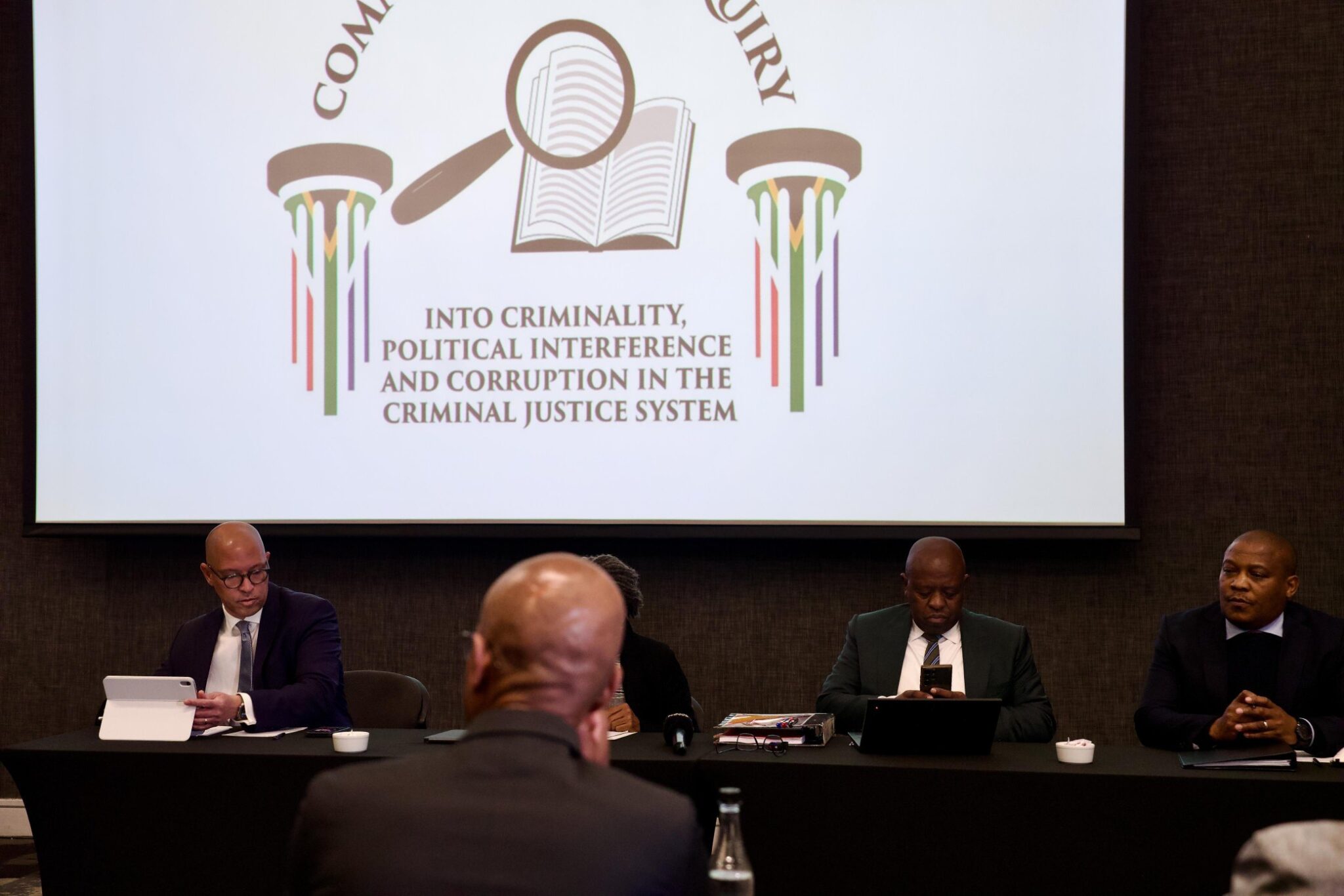
The National Coloured Congress (NCC) Member of Parliament, Fadiel Adams was back at the Madlanga Commission of Inquiry at the Bridgette Mabandla Justice College in Tshwane.
Adams continued his testimony before the commission, explaining why he opened criminal cases against senior Crime Intelligence officials without first informing Parliament’s Portfolio Committee.
He testified that although he did not inform the portfolio committee, he discussed the matter with Democratic Alliance (DA) MP, Ian Cameron.
Adams told the commission that notifying the committee would not have made any significant difference.
He testified that although he did not inform the portfolio committee, he discussed the matter with Democratic Alliance (DA) MP, Ian Cameron.
Adams told the commission that notifying the committee would not have made any significant difference.
The matter stems from documents slipped under the door of his parliamentary office in what he described as a brown envelope.
The documents contained serious allegations against senior Crime Intelligence officials, including claims of corruption, fraud and the misuse of Secret Service funds.
Adams subsequently initiated criminal charges following a Section 27 investigation referral.
He said he then travelled to Gauteng and opened a case at Orlando Police Station in Soweto, claiming the docket disappeared on the same day the charges were laid.
The commission heard that a colonel at the Orlando police station, referred to as Witness G, assisted Adams in opening the case.
Adams said he does not know the colonel and was simply directed to him by the late Major-General, André Lincoln, when he went to the police station to open the case.
“I had been sent the contact of Colonel Elvis by Honourable Lincoln. He said to me when you are close to the police station, call. I get to the police station, I got inside and I called. I cannot remember if he took my statement or not because it was two years ago. Elvis is a colonel. I saw him once and never saw him again. I don’t know him. I received his contacts on the morning that I went to press charges,” Adams said.
The evidence leader Lee Seegels-Ncube put it to Adams that Lincoln, despite being retired, appeared to have extensive knowledge of what was happening inside Crime Intelligence and was feeding that information to him.
“I would say yes”, Adams replied.
Asked where Lincoln obtained this information, Adams said: “That man knew so much about SAPS and the underworld.” Given Lincoln’s former position as head of the Anti-Gang Unit, Adams described him as a “walking encyclopedia” on SAPS affairs.
That trust was central to Adams’ account of the missing dockets. He said Lincoln’s apparent knowledge of SAPS affairs was why he accepted, without questioning it, Lincoln’s claim that his dockets had been intercepted.
“I believed him without questioning him,” Adams said.
Adams further told the commission that the transfer of dockets opened in Cape Town to the national police headquarters in Pretoria raised concerns that the cases were being intercepted.
The commission heard that Adams had emailed suspended Police Minister, Senzo Mchunu, requesting his intervention.
Commissioner, Sesi Baloyi, however, explained that the dockets were expected to reach the national office because Adams had escalated the matter directly to the minister, who then responded to his request for intervention.
The Commission adjourned for the day to allow Adams to listen to recordings of his interactions with the Investigating Directorate Against Corruption (IDAC).
Adams, who has been testifying before the commission for the past two days, is a central figure in the Section 27 affidavit that was used to investigate and subsequently prosecute seven Crime Intelligence officials.
Meanwhile Stuart Scharnich, who is linked to Shadrack Sibiya, was taken into custody after threatening a journalist covering proceedings during the commission’s tea break.
Scharnick has previously made headlines over his alleged links to senior police officials and reported involvement in matters at the centre of the commission’s corruption investigations.
Footage recorded at the commission on Thursday shows Scharnick pointing a finger at a journalist and accusing him of fabricating stories about him on social media.
Commission spokesperson, Jeremy Michaels, said while the public cannot be prevented from attending the proceedings, everyone is expected to conduct themselves appropriately and respect the commission’s rules.
Michaels said the commission will review its security and attendance protocols to prevent similar incidents from occurring, while stressing the important role played by journalists covering the proceedings.