
By Lehlohonolo Lehana.
The suspended Deputy Crime Intelligence head, Feroz Khan, has been ordered to testify before the Madlanga Commission of Inquiry on 28 September 2026.
Khan was due to appear before the Commission on Tuesday, 1 September.
Fullview learnt that he has been readmitted to a Johannesburg hospital raising fresh uncertainty over his testimony.
Commission spokesperson Jeremy Michaels said Khan’s legal team had indicated that it may ask for a postponement when proceedings get underway.
However, no formal application was received by the commission.
“From what we understand, he was released from hospital several weeks ago,” Michaels said, in the absence of a postponement application, Khan remains required to appear.
Khan was previously hospitalised after being wounded in a shooting in Houghton in June. He was discharged in July, and his family said at the time that he would be taken to an undisclosed location to undergo rehabilitation and recuperation.
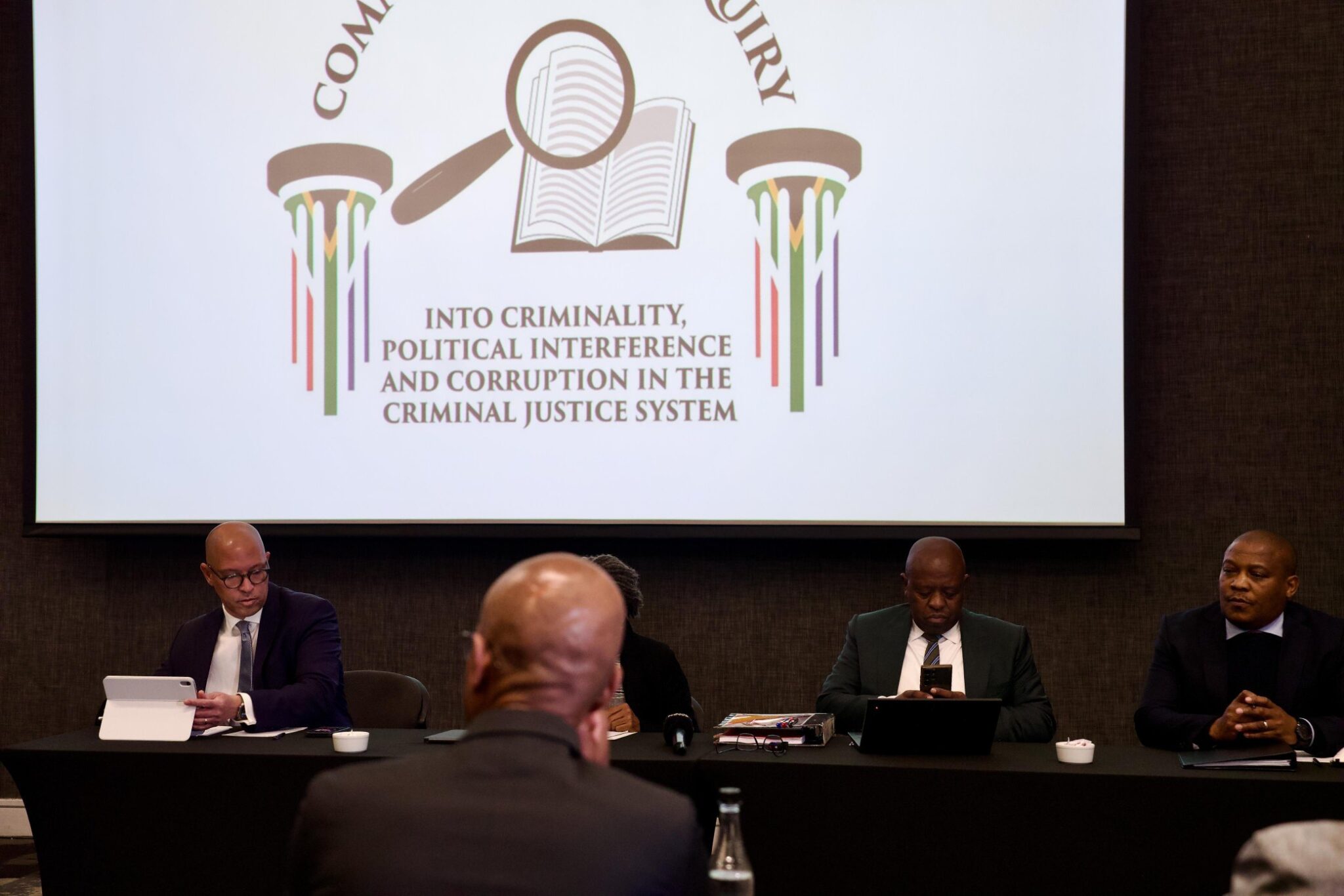
During the proceedings on Tuesday, Commission chairperson, Justice Mbuyiseli Madlanga, examined details contained in Khan’s backdated medical reports as he considered the reasons for his failure to appear before the Commission.
Khan’s lawyers told the commission that his doctors are unable to determine when he will make a full recovery, but believe he could be fit to testify from 1 October.
However, Madlanga said, the commission cannot simply wait until then, insisting that it needs to be properly informed about Khan’s condition.
“I will not say the commission is going to force General Khan to subject himself to being examined by an independent doctor, but rather a ruling similar to that that which was made in respect of Salim Carrim is what must be issued here as well.
“But a qualification that I am going to make and which must be captured in the draft ruling, is that General Khan’s condition must be disclosed, but what must not be disclosed are the details concerning that condition,” Justice Madlanga said.
Justice Madlanga added that Khan will only be excused from appearing if he undergoes an independent evaluation by a medical specialist agreed between his representatives and the commission.
The evaluation is expected to be conducted no later than 8 September, and the medical report confirming that Khan is medically unable to testify must be provided to the commission by 15 September.
Justice Madlanga further added that Khan’s condition must not delay the submission of his outstanding statement. He ordered that the statement be submitted by 18 September.
Fullview also learnt Khan will appeal today’s labour court ruling and once again review SAPS disciplinary process which recommended Khan be dismissed.
It is understood a directive was also issued to terminate Khan’s medical aid plan, Polmed; given the DC outcome which recommended he be dismissed.
However, his legal team had to intervene, asserting that such an action could contravene the Medical Schemes Act.
Meanwhile, former Hawks head,Dr Godfrey Lebeya told the commission that he cannot recall former KwaZulu-Natal (KZN) Hawks boss, General Lesetja Senona, raising concerns with him about the controversial Port Shepstone drug consignment.
The matter centres on 541 kilograms of cocaine, worth an estimated R200 million, which was seized at Durban Harbour in June 2021 before being stolen months later from a poorly secured Hawks walk-in safe in Port Shepstone.
Lebeya said Senona informed him about the initial drug bust, but he only became aware that the cocaine had been stored at the Port Shepstone facility after reading a report on the matter.
Lebeya further revealed that he did not subject Senona to a polygraph test following the theft of the cocaine.
He faced tough questioning over his decision not to investigate Senona, saying he viewed the former provincial Hawks boss as a complainant rather than a suspect.
The commission heard that Lebeya had been provided with a report identifying key role players in the cocaine consignment case, including Senona.
Lebeya struggled to explain why Senona was not subjected to further scrutiny, instead pointing to the supervisor responsible for the investigation.