
By Lehlohonolo Lehana.
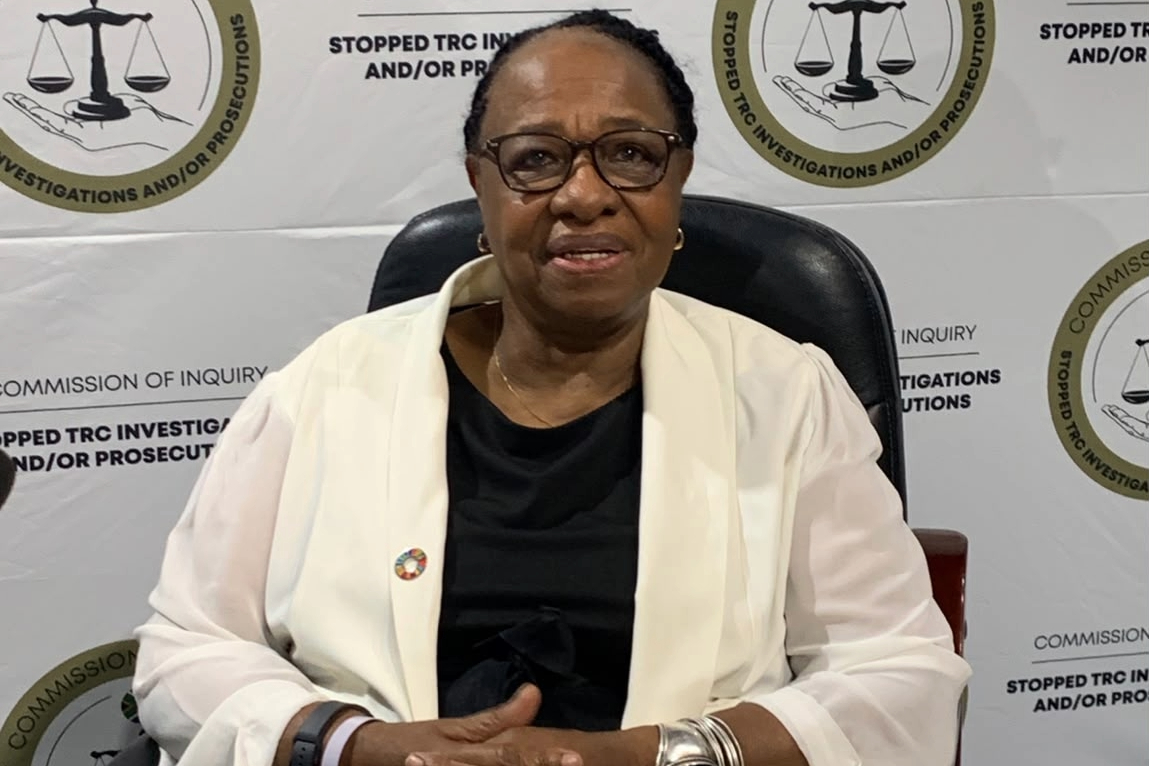
Former Justice Minister Bridgette Mabandla, whose name has featured greatly in the Truth and Reconciliation Commission (TRC) Cases Inquiry occupied the hot seat on Wednesday, 21 October 2026.
The TRC Cases Inquiry was established to determine whether attempts were made to prevent the investigation and prosecution of apartheid-era crimes.
The Inquiry is chaired by retired Constitutional Court Judge Sisi Khampepe, assisted by retired Northern Cape Judge President Frans Diale Kgomo and Advocate Andrea Gabriel SC.
Former President Thabo Mbeki was in attendance at the TRC Cases commission to show support to Mabandla.
Mbeki has rejected allegations that his administration laid the ground for political interference in apartheid-era prosecutions.
He insisted that those who did not qualify for amnesty had to remain accountable under the law.
Mbeki distinguished between cases referred by the TRC to the National Prosecuting Authority (NPA) and others involving people who didn’t participate in the TRC process.
The Inquiry is examining whether political interference obstructed the prosecution of apartheid-era crimes after the TRC process.
Mabandla told the inquiry that she had never made a phone call on 11 November 2004 to then special director of national public prosecutions Dr Silas Ramaite, calling for a moratorium on TRC prosecutions.
Ramaite oversaw TRC prosecutions in the National Prosecuting Authority (NPA) and acted as its head after its inaugural head, Bulelani Ngcuka, resigned.
The senior prosecutor alleged that the call by the minister was made shortly before former apartheid minister of police Adriaan Vlok and police commissioner Johan van der Merwe were to be arrested, alongside others, for the attempted murder by poisoning of Reverend Frank Chikane in 1989.
Mabandla denied that she or any official in her ministry had made a call to Ramaite with this instruction. She said she had been so determined to get to the truth of the matter that she consulted with former NPA head Vusi Pikoli about it.
“I wanted to recall the truth as to why I had not been certain about the question of a phone call because in my mind I knew all the time it could not have happened,” she told the panel.
Mabandla said that she had gone back with her legal team to check the dates of the alleged call to Ramaite and that she had in fact been in Bangui in the Central African Republic at the time.
She said she was certain she did not make the call, but did not have the information to substantiate this.
She further maintained that her department would not have intervened in prosecutorial decisions, which fall under the National Prosecuting Authority (NPA).
Explaining her working relationship with the NPA, Mabandla said she relied on formal meetings and established government channels to communicate with prosecuting officials.
She said routine policy matters and issues requiring input from prosecutors were generally discussed at scheduled meetings. Her familiarity with former NDPPs, Ngcuka and Vusi Pikoli, also allowed her to contact them directly when necessary, although meetings were arranged through officials in her office who communicated the purpose of the engagement.
Mabandla also told the commission that she could not recall all the details surrounding the handling of TRC cases during her tenure as Justice Minister from 2004 to 2008, citing the passage of time and her lack of access to official records.
Her testimony also touched on the Justice Department’s efforts to implement TRC recommendations, including reparations and investigations into missing persons.
The Inquiry is yet to make findings on the allegations against Mabandla. It adjourned on Wednesday and is expected to resume on Thursday, 22 October 2026.