
By Lehlohonolo Lehana.
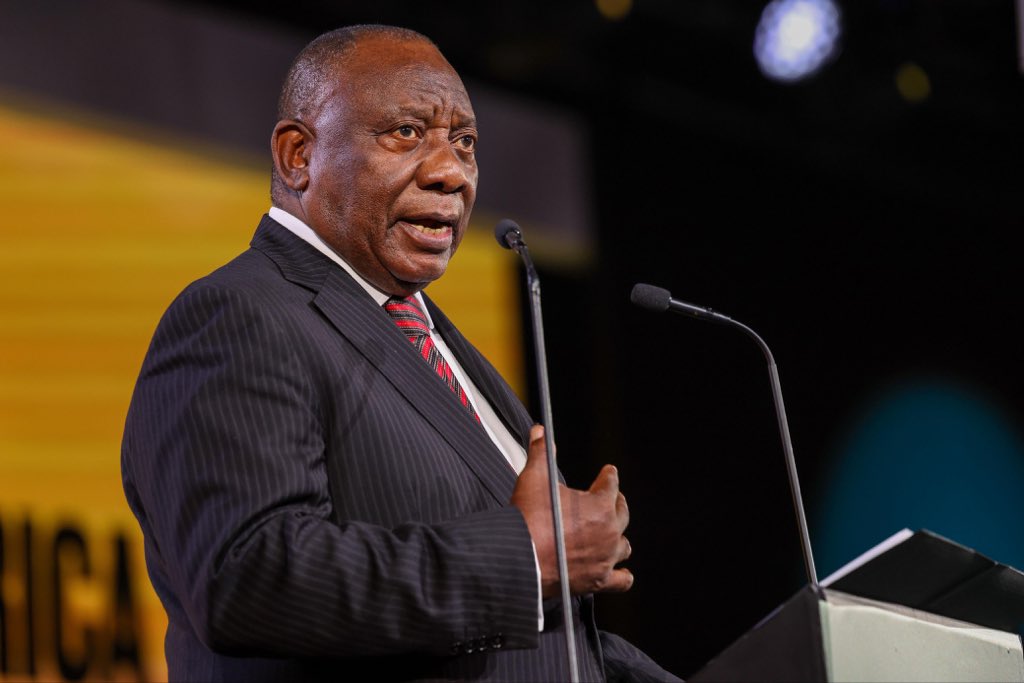
President Cyril Ramaphosa called on the corporate South Africa to create space for young people to help gain experience in the workspace.
Ramaphosa was addressing the 50th anniversary of the Soweto Uprising outside Soccer City stadium on Tuesday, 16 June 2026.
The programme included a wreath-laying ceremony at the Hector Pieterson Memorial site, followed by the main commemoration event at the Soccer City Stadium precinct.
The 2026 National Youth Day Commemoration is held under the theme: “RESET @50 – Our National Commitment to the Future for Freedom Lives in Every Generation.”
On the morning of 16 June 1976, students walked from schools across Soweto, intending to converge at Morris Isaacson High School before making their way to Orlando Stadium. Armed with nothing but determination and hope, the young people stood face-to-face with a brutal system designed to silence them.
They marched not only against an education policy but against an oppressive regime that sought to suppress their voices, dreams and futures.
Unfortunately, the students never reached Orlando Stadium, where they were due to hand over their memorandum of demands to the government. Police used tear gas and batons for crowd control, and what was meant to be a peaceful protest descended into chaos as officers began shooting at protesters, killing many of them.
Delivering his keynote address, Ramaphosa made clarion call to corporate South Africa to invest in the nation’s youth through employment and skills development initiatives.
“I am asking the private sector to open the doors. The doors of employment. The government has opened the doors to learning.” Ramaphosa stated.
Ramaphosa highlighted several government programmes aimed at providing young people with work opportunities and practical experience.
Among these is the Basic Education Employment Initiative, which in 2025 placed 200 000 unemployed young people in schools across the country, including farm schools and those in remote rural communities. The participants provided support in classrooms and administrative roles while gaining valuable workplace experience.
According to Ramaphosa, the programme has helped young people gain a foothold in the labour market while strengthening educational institutions serving vulnerable communities.
He also highlighted the Social Employment Fund, which provides part-time employment opportunities in sectors such as food production and agriculture, education, healthcare, environmental management, and community safety.
While outlining these interventions, Ramaphosa acknowledged that long-term progress ultimately depends on stronger economic growth.
He said government is pursuing infrastructure investment and economic reforms to improve competitiveness and attract investment, noting that South Africa had secured R890 billion in new investment pledges over the past year.
However, he cautioned that economic growth alone will not automatically translate into opportunities for young people unless barriers to labour market participation are addressed.
“The scale of the challenge demands that we sustain and deepen these efforts,” Ramaphosa said.
Ramaphosa encouraged young people to actively participate in democracy by registering to vote and holding public representatives accountable, as the country counts down to the 4 November 2026 polls.
He said the best way to honour the youth of 1976 is to build a South Africa where every young person has the opportunity to learn, work and live with dignity.
To vote in the Local Government Elections (LGE) on 4 November, voters need to be registered to vote and must have their smartcard or green bar-coded identity document (ID) or a valid Temporary Identity Certificate (TIC). A voter must also be a South African citizen and aged 18 years and above.
South Africans are called to check their registration status, voting station and ward details on the IEC’s website using this link: https://www.elections.org.za/pw/Voter/Voter-Information.
Meanwhile political parties observed annually Youth Day on June 16 through nationwide rallies, community outreach programs, and voter registration drives.
Julius Malema says Economic Freedom Fighters (EFF) is the only party that reflects the aspirations of the majority of black youth.
Malema was speaking in Pretoria on Tuesday at a Youth Day rally.
“Every young person in South Africa belongs to the EFF including those who are wearing ANC t-shirts, they belong to the EFF, we are going to take them from the ANC and show them the direction, they are lost,” he said.
Malema said the ANC has lost credibility, and wearing ANC regalia in public has become an embarrassment.
He said he is pleased with the large number of young people who supported his party’s youth day rally at the Union Buildings.
He urged them to register for the upcoming local government elections and get his party in the council chambers of municipalities.
Democratic Alliance (DA) leader Geordin Hill-Lewis said the DA has proven that it can interact with South Africans from all walks of life.
“The DA is the only party in South Africa that can go into any kind of neighbourhood in our country, and we do not just go there, we can win there. We can go into suburbs and we can go into townships, we can go into rural villages and we can go into City centres, we can go into communities that speak every different language – that worship in different ways that come from different histories, that face different daily struggles and we can honestly and truthfully say to them, we stand for everyone,” he said.
Umkhonto weSizwe (MK) party leader Jacob Zuma addressed Youth Day rally at the Mayine Sports Ground in Ermelo, Msukaligwa, Mpumalanga.
During the rally, Zuma pledged that if the MK Party comes into power, it will prioritize accelerated service delivery. His remarks focused on building houses, hospitals, and schools to uplift historically disadvantaged and rural communities.
Ramaphosa also used Youth Day commemorations to address the country’s growing anxiety over illegal immigration, dismissing the widely circulated 30 June deadline for undocumented foreign nationals to leave South Africa as unnecessary.
Ramaphosa said government had already put measures in place to deal with the issue.
Additionally, the president made clear that dealing with undocumented nationals was a matter for the state, not for ordinary citizens.
He cautioned against South Africans taking matters into their own hands. No South African must take any action against any person from any of our African sister countries, he said.