
By Lehlohonolo Lehana.
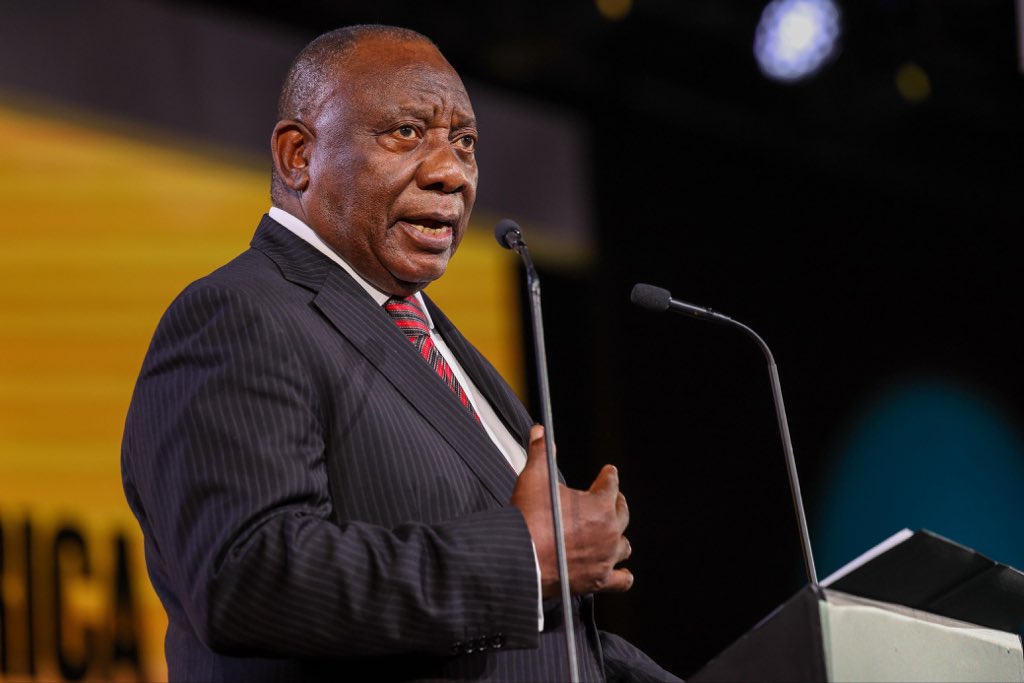
In a significant boost for regional integration and water security, President Cyril Ramaphosa on Wednesday officiated the opening of Senqu Bridge in Mokhotlong, Lesotho.
Ramaphosa was joined King Letsie III, Prime Minister Samuel Matekane, Water and Sanitation Minister Pemmy Majodina, Deputy Minister David Mahlobo, Deputy International Relations and Cooperation Minister Alvin Botes at the ribbon-cutting ceremony for the bridge, which was constructed at a cost of approximately R2.4 billion over a three-year period.
Senqu Bridge is the largest of three major bridges being developed as part of Phase II Lesotho Highlands Water Project alongside the Mabunyane and Khubelu bridges.
The bridge was designed by Zutari, formerly known as Aurecon Lesotho, working with White Life Consultants of Lesotho and Leporogo Specialist Engineers of South Africa.
These crossings are designed to ensure continued access across the Polihali Reservoir once water levels rise following the dam’s completion.
Measuring about 825 metres in length and standing roughly 90 metres high, the Senqu Bridge will provide a vital transport link across the reservoir, maintaining connectivity to the national road network via the A1 route, which links Mokhotlong to Maseru.
The bridge was declared ready for use by motorists on 22 April 2026 in Mokhotlong District, Lesotho.
Ramaphosa acknowledged the challenges faced during construction. “The project has experienced a number of challenges. However, the project team stayed focused. It has worked to ensure that no affected communities and no households are left worse off by this construction,” he said.
Ramaphosa said the high-altitude bridge underscored strong bilateral ties and would support economic development in both countries.
“Rising high above the river valley, more than 2,500 metres above sea level, this bridge has been built to endure and will serve many generations,” said Ramaphosa.
“Together with the two other bridges being constructed to span the Polihali reservoir, this bridge will improve travel across this part of the country, making transport easier and cheaper for communities, businesses and visitors.”
King Letsie III welcomed the project as a symbol of deepening economic interdependence, but warned of the social cost to communities displaced during construction.
He urged both governments to ensure affected families are properly resettled and compensated, in line with treaty obligations.
Matekane said the project’s success would ultimately be judged by its impact on local communities.
“It must deliver real, tangible benefits and improve the daily lives of the people affected,” he said.
Phase II of the Lesotho Highlands Water Project will increase water transfer volumes from 780 million to 1.27 billion cubic metres per annum whilst boosting Lesotho’s hydropower output.
The Polihali Dam currently stands at 44% completion, whilst the 38 km transfer tunnel connecting Polihali and Katse reservoirs is 51% complete. Water impoundment is planned for November 2026, with full commissioning expected in 2028.
“The Lesotho Highlands Water Project is one of the most ambitious and successful transboundary water projects in the world. It is the largest investment South Africa has ever made outside its borders,” Ramaphosa said.
The president also announced that South Africa will provide R30 million in humanitarian assistance to Lesotho from the African Renaissance Fund to strengthen the kingdom’s national response to HIV and tuberculosis.
“South Africans and Basotho will forever be bound together, shaped by a common destiny, grounded in history, geography, language and culture,” he said.
Senqu Bridge is the first extradosed bridge in Lesotho, combining cable-stayed and prestressed girder design, and was constructed using an incremental launching method to improve safety and reduce environmental disruption.
It will stand as evidence of what the bilateral partnership between Lesotho and South Africa is capable of producing when its institutional resources are fully mobilised behind a well-defined objective.