
By Lehlohonolo Lehana.
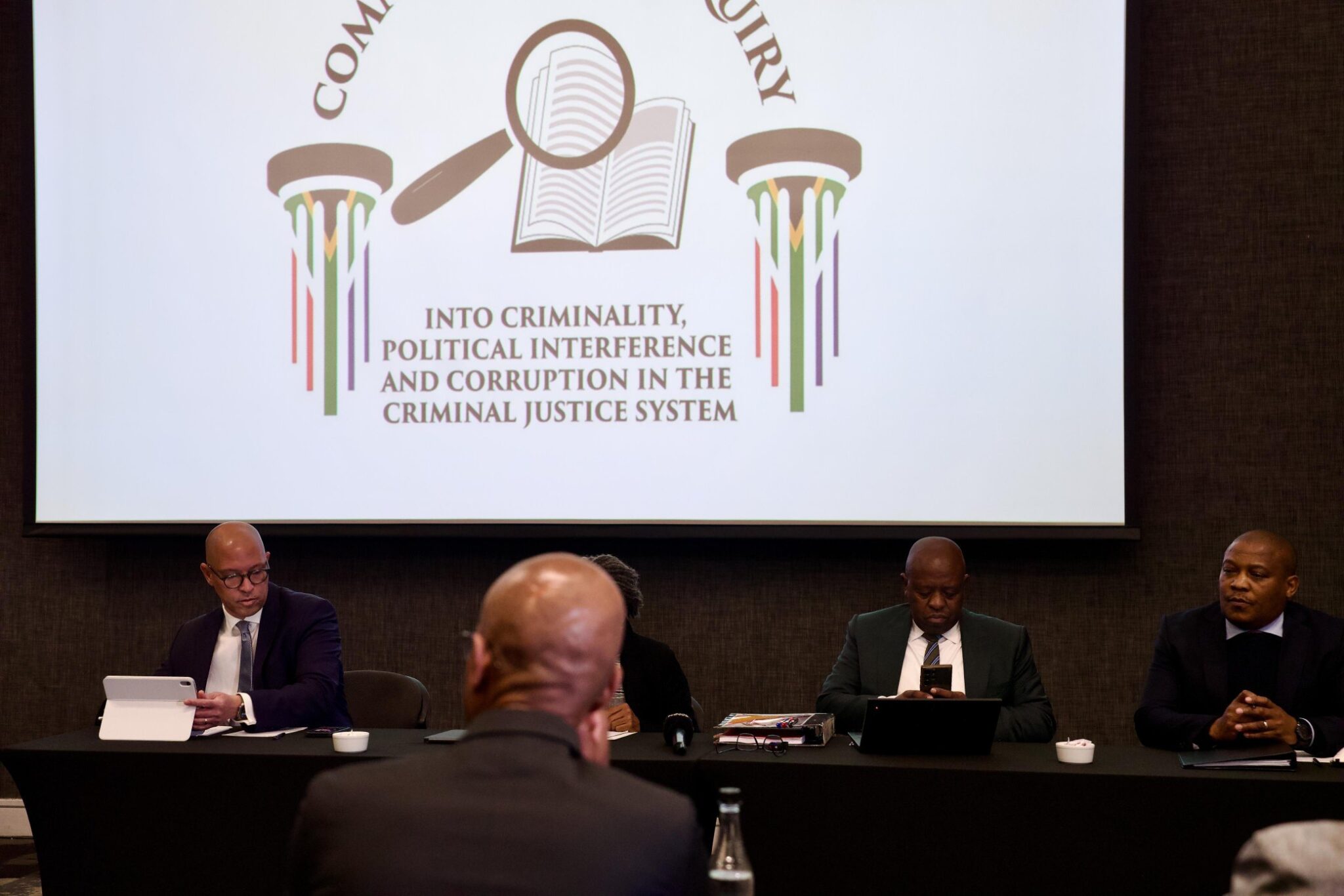
The Investigating Directorate Against Corruption (IDAC) prosecutor Drushantha Ramsamy was back before the Madlanga Commission of Inquiry on Wednesday morning to continue her evidence on her involvement in the investigation into a whistleblower report submitted by National Coloured Congress (NCC) Member of Parliament (MP) Fadiel Adams two years ago.
In the report, Adams alleged that the Political Killings Task Team (PKTT) used the Secret Services Slush Fund to purchase luxury vehicles and pay for hotel accommodation.
Ramsamy broke down in tears while testifying about how she believes the unit’s former head, Andrea Johnson, threw her under the bus.
The commission briefly adjourned proceedings to allow Ramsamy time to compose herself before continuing with her evidence.
She was testifying about how Johnson involved her in an investigation into allegations that the PKTT had been abusing the slush fund.
Johnson asked Ramsamy in 2024 to draft a section 28 (13) application, which is a request for the authority to conduct a preliminary investigation into allegations of the abuse of the fund.
Ramsamy told the commission that Johnson provided her with the information on which the application was based, including the names of the individuals to be investigated.
The commission has been examining IDAC investigations into the appointment of Crime Intelligence Technical Support Services head Brigadier Dineo Mokwele and the robbery involving Crime Intelligence CFO Major-General Philani Lushaba.
Ramsamy’s testimony centred on what she described as sustained pressure from Johnson to fast-track arrests under the umbrella investigation known as Project Diversion, despite repeated concerns that investigators were abandoning the prosecutor-guided approach required by law.
She described what she called relentless pressure from Johnson to accelerate Project Diversion.
“It seemed that out of nowhere Advocate Johnson started putting immense pressure on the team to start effecting arrests on Project Diversion. Adv Johnson wanted the matters enrolled as a matter of urgency. She was eager for the arrests to be effected as soon as possible or, as she put it, ‘let us strike while it’s hot’, she said.
She accused her former boss of being dishonest and attempting to sacrifice junior staff to distance herself from controversial operational decisions.
Johnson previously told the commission that she relied on her team’s investigative report.
According to Ramsamy, investigators planned to pursue arrests first in the Lushaba matter, followed by the Mokwele investigation, before turning to cases involving Crime Intelligence Analysis and Coordination head Major-General Nosipho Madondo, suspended National Police Commissioner General Fannie Masemola and Crime Intelligence head Lieutenant-General Dumisani Khumalo.
She said Johnson had frequently referred to meetings with suspended police minister Senzo Mchunu while directing the investigation.
Ramsamy recalled Johnson telling investigators that she had attended a meeting at Mchunu’s home, where she left her cellphone with her protection officers and waited with his chief of staff, Cedrick Nkabinde, before meeting the minister.
She further alleged that Mchunu and Johnson initiated a report about Nkabinde, which would incriminate him in a criminal investigation.
Johnson is likely to face intense scrutiny over her alleged phone comments and claims by Ramsamy that she personally spearheaded the investigation into Masemola and Khumalo — despite her shifting the blame onto subordinates during her testimony.
A critical turning point in the inquiry will be Ramsamy’s explanation of a handwritten suspects list, which was used to secure a Section 28(13) authorisation — a legal mechanism allowing IDAC to broaden its investigation beyond Adams’ original complaint.
Ramsamy’s evidence is expected to continue on a date yet to be announced, while the commission is scheduled to hear a new witness on Thursday morning.