
By Lehlohonolo Lehana.
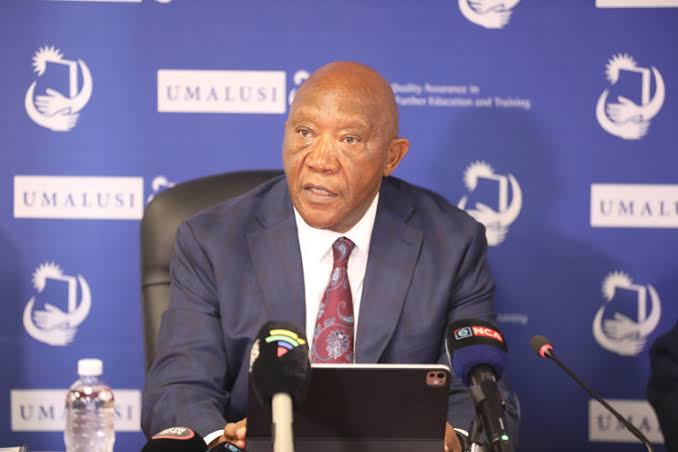
The Council for Quality Assurance in General and Further Education and Training in South Africa, Umalusi CEO Dr Mafu Rakometsi said the system was broadly ready to administer the 2026 year-end national matric exams.
Rakometsi led a media briefing on the state of readiness in Pretoria on Thursday, 08 October 2026.
A total of 1 079 879 candidates will sit for the General Education and Training Certificate: Adult Basic Education and Training (GETC: ABET), National Certificate (Vocational) [NC(V)] Level 4 and National Senior Certificate (NSC) examinations.
Umalusi conducted its state of readiness audit from 24 August to 30 September 2026, with exams slated to commence on 13 October.
“The audit covered candidate registration; staffing at examination and marking centres; external moderation of internal assessments and question papers; security measures for printing, packaging, storage and distribution of question papers; mark-capturing systems, and structures for managing examination irregularities.”
“On the evidence presented, Umalusi is satisfied the system is broadly ready to conduct, administer and manage the 2026 year-end national examinations, which will involve approximately 1.08 million candidates at 9 183 examination centres,” Rakometsi explained.
He acknowledged that challenges remained but maintained that these would not undermine the credibility of the examinations.
“The areas of concern identified are not systemic and do not threaten the overall credibility or integrity of the 2026 examinations,” he said.
Rakometsi confirmed that examination material is currently in printing, according to approved plans.
“Security protocols for the printing, packaging, storage and distribution of question papers and related materials are the aspects of Umalusi’s quality assurance work, which are not discussed publicly due to their confidential nature.”
“Umalusi is satisfied that adequate plans are in place to secure the entire value chain. Regular visits will be made to all assessment bodies,” Rakometsi said.
All submitted question papers and institution-based assessment tasks have been approved after confirmation that they have been designed “in accordance with the standards for each qualification and complied with the relevant quality-assurance requirements”.
“The papers will be distributed to the approved examination centres in accordance with the approved plans.”
“Candidates have been registered in line with the relevant regulations, and eligible candidates have received concessions and accommodations in accordance with applicable policies,” Rakometsi assured.
Invigilation staff have been adequately trained to execute duties related to “conduct, administration and management” of the exams.
“Concerning marking personnel, Umalusi is satisfied that the assessment bodies have sufficient marking capacity. Although the DBE reported marker shortages in Afrikaans Home Language, English Home Language and History, Umalusi is confident that the DBE’s plan to start marking early and phase the process will adequately mitigate the risk.”
“Because the DHET will finalise its marker appointment process later in this month, Umalusi will be able to pronounce on the marking capacity of the DHET on or before 19 October,” Rakometsi noted.
The mark-capturing systems used by all four assessment bodies are also in compliance with Umalusi’s requirements.
Each body will use a double-entry process with one official capturing the marks and another verifying them. All mark capturers will be trained before the process begins.
The CEO wished the candidates well ahead of the start of exams.
“Umalusi wishes the Class of 2026 strength and determination as candidates enter the final stage of their journey through the general and further education and training system.”
Meanwhile the Limpopo High Court has cleared 50 former matric pupils accused of group copying, overturning examination irregularity findings.
The court has ordered the Limpopo Department of Education to release the learners’ statements of results within five days and issue their formal National Senior Certificates within 30 days.
The learners’ 2024 matric results were withheld after similarities in their answers to Business Studies Paper 1 and Economics Paper 2 were treated as evidence of “group copying”.
The learners consistently denied cheating, saying the similarities were linked to teaching methods used at their under-resourced school.
SECTION27, which represented the learners, said teachers used methods including singing, group repetition and recitation to help learners memorise concepts and essay structures because of limited access to textbooks and other learning materials.