
By Lehlohonolo Lehana.
@GalloImages.
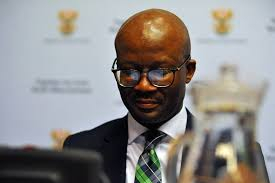
National Treasury Director-General Dondo Mogajane says a culture of self-enrichment among some politicians and public servants is putting the country’s democracy and post-apartheid promises of creating a better life for all at risk.
“We have to remind our leaders – and I’m speaking as a South African – who are in government, in public service and politicians to get off your high horse and do what we have to do to ensure we create access and a conducive environment for people’s lives to change,” Mogajane, said Thursday at a National Budget Dialogue.
“If that’s not going to be a motivating factor, we can start calling South Africa a failing state because the things that define a failing state are beginning to show, where we don’t care about the poor and improving their lives.”
Mogajane’s comments come after the Institute of Risk Management South Africa (IRMSA) published a report this week warning that South Africa risks becoming a failed state if its lack of decisive, ethical, and courageous leadership persists.
“A few years ago, very few people could have predicted the state that the world would find itself in now, largely due to the consequences of Covid-19. In addition, there are perennial threats that continue unabated and are likely to continue into the foreseeable future,” the IRMSA said.
“In the South African context, the top risks remain similar to those of the past, albeit at an increased level, mainly due to our failure to decisively respond to them. The culmination of those risks continuing and worsening leads to the greater debate: will SA become a failed state – or is it already a failed state?”
If South Africa continues to experience a continued breakdown of ethical and legal principles, unmanageable societal unrest and breakdown of the rule of law, complete economic collapse becomes almost inevitable, it said.
“This can only be avoided if we very quickly develop and activate the skills we need to avoid disruption due to unstable utility supply and digitally-enabled economic activities, whilst retaining our relevance in Africa and respond to climate change risks.”
Mogajane said the Treasury would apply to the Constitutional Court to provide clarity on the government’s legal position where it relates to the public procurement of goods and services.
In February, the Constitutional Court dismissed an appeal from the minister of finance seeking relief from a case Afribusiness initiated to have the minister found to have acted beyond their scope of powers when the office promulgated the Preferential Procurement Policy Framework Act in 2017.
The legislation stipulated that only companies that complied with certain criteria, including B-BBEE status, could apply for tenders. However, Afribusiness challenged the framework, saying it excluded white South Africans and their businesses.
Treasury then issued an advisory to all state-owned entities and departments stating that all tenders advertised after 16 February would be held in abeyance pending further clarity from the highest court in the land.