
By Kevin Rademeyer, Sports Journalist.
There are moments in sport when statistics, expectations, and history crumble under the weight of sheer belief. South Africa’s women’s cricket team has built a reputation on those moments, when odds turn into opportunity, when resolve eclipses reputation. Their latest triumph in Visakhapatnam was one such story. A story not just of victory, but of resilience, character and the unbreakable will that defines the Proteas Women.
When Nadine de Klerk walked to the crease at the Dr Y.S. Rajasekhara Reddy Stadium, the scoreboard read 142 for six. The equation, 110 runs needed from 85 balls, looked like a mountain against the backdrop of a roaring home crowd and a spinning Indian attack. For most, it would have felt like the beginning of the end. For South Africa, it was the beginning of belief.
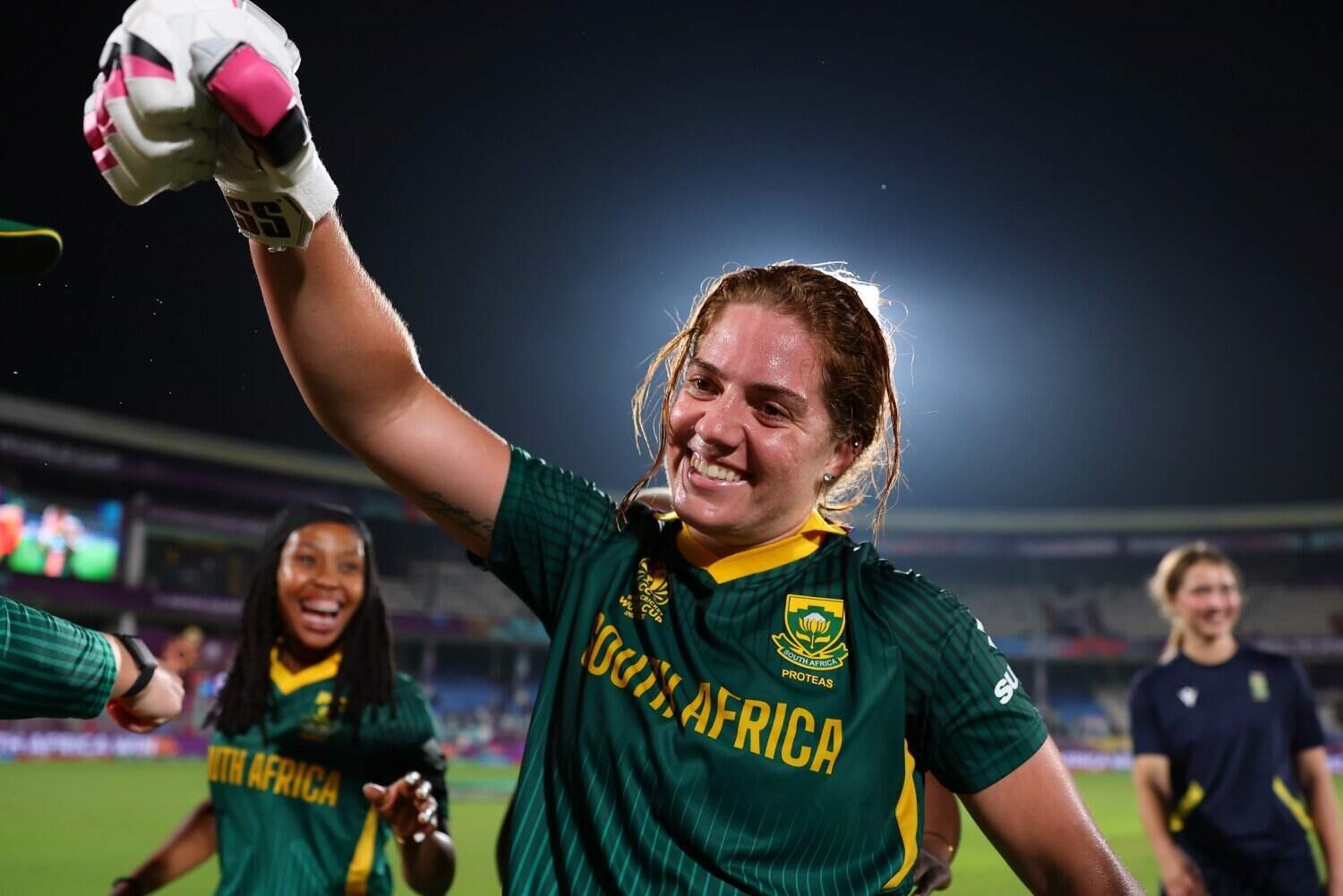
What followed was a masterclass in composure and courage. De Klerk, not always the headline name in South Africa’s line-up, produced a career-defining unbeaten 84 from just 54 deliveries to guide her team to a remarkable three-wicket victory over India. It was the fifth-highest successful chase in Women’s World Cup history, and the latest chapter in South Africa’s ever-growing anthology of improbable comebacks.
Their journey to this point has rarely been smooth. Just months ago, the Proteas had suffered a string of defeats in subcontinent conditions. Early in the tournament, they were bowled out for 69 against England, a performance that might have shaken a lesser team. But this side, led by the calm and unflappable Laura Wolvaardt, thrives on defying its own narrative. They absorb the setbacks, regroup, and rise, every time, stronger than before.
De Klerk’s innings in Visakhapatnam was a portrait of calculated aggression and calm self-belief. Alongside Chloe Tryon, who struck a gritty 49 despite a strapped leg, she rebuilt the chase one bold stroke at a time. When Tryon eventually fell, the task still seemed steep. Yet de Klerk’s intent never wavered. She targeted India’s young pacer Kranti Gaud, launching consecutive sixes over deep midwicket before sealing victory with another towering blow into the stands. It was audacious, fearless, and utterly Protea.
“Simplicity is everything,” de Klerk said later. “It was just about backing myself, not trying to overhit, and trusting the timing. “Her words reflected a deeper truth about this South African side — a simplicity of purpose, grounded in self-belief and collective grit.
Behind every highlight reel lies the quiet discipline of the squad: Nonkululeko Mlaba’s early breakthroughs, Marizanne Kapp’s tireless spells, Wolvaardt’s patient 70 that steadied the innings when all else faltered. Even in adversity, each player performs with a sense of duty to the team rather than to the individual. That unity, the refusal to surrender when others might, is the lifeblood of the Proteas identity.
And this isn’t new. From the heartbreak of their near misses to the jubilation of their first World Cup final appearance in 2023, South Africa have built their legacy not on trophies, but on fight. They are the side that turned a 6–0 drubbing in England into a World Cup run that stunned the cricketing world months later. They are the side that finds power in persistence.
When de Klerk punched the emblem on her jersey after reaching her fifty, it was more than celebration. It was symbolism. A gesture that captured what it means to wear green and gold , to battle when the odds are heavy, to endure, to believe.
As thousands of Indian fans fell silent that night, drowned out by a small but jubilant South African contingent, the Proteas once again reminded the world what defines them. Not the fear of failure. Not the weight of expectation. But the relentless courage to keep fighting until the very last ball.
Because for the Proteas Women, defeat is never final, not until the fight is over. And the fight, for them, never truly ends.