
By Lehlohonolo Lehana.
Energy and electricity minister Kgosientsho Ramokgopa says South Africa is forging ahead with the plans to build a nuclear plant for electricity generation.
He was speaking to the media on the sidelines of the Cabinet Lekgotla held in Tshwane at the weekend.
Ramokgopa said that the nuclear plan aims to secure approval from the Treasury at “a scale and speed that we can afford”.
“In the long term, we need to ensure that we anchor the baseload and nuclear is an important part of that intervention. We are working on the framework for procurement because we don’t want to discredit the process through a procurement process that is not transparent.
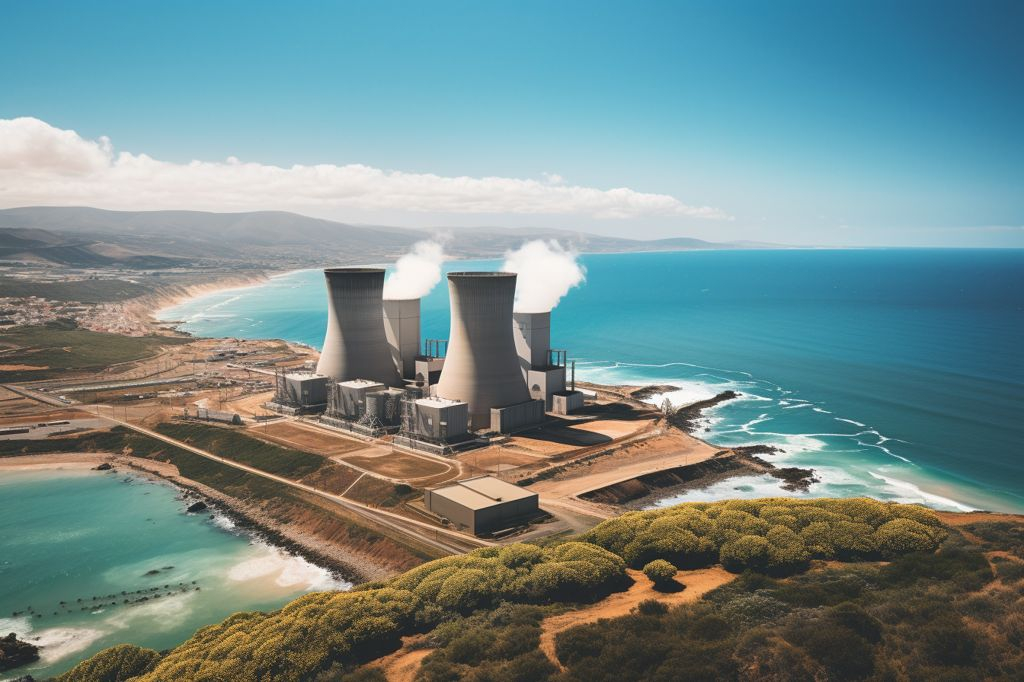
The minister said that Eskom will likely run the plan given its experience with Koeberg near Cape Town.
Koeberg is the only nuclear power station in South Africa and produces 1,860MW when fully operational.
However, the station is undergoing life-extension maintenance, with unit 2 offline until later this year. The maintenance has been anything but smooth sailing for Eskom, with several delays at both units.
The minister said the department will have more information on the proposal by the end of August.
Ramokgopa initially revealed the intention to launch the procurement process in December 2023.
The determination was first signed off by the now unbundled Department of Mineral Resources and Energy and concurred with by Nersa in 2021. However, after Ramokgopa received new powers following an exchange between the relevant ministries, another layer of approvals was required.
South Africa has not experienced load shedding for the last 100 days, a feat last achieved in 2021.
The Minister also raised his concern that poorer communities are battling to keep up with increasing costs.
“The poor and those that are located in the townships are finding it exceptionally difficult to afford the increases in electricity. The pricing and the tariff is prohibitive and a lot of our people across the length and breadth of the country are not in a position to afford electricity.
“Those are challenges on the distribution side…and we know that over a period of time municipalities have underinvested in the maintenance, replenishment and protection of the distribution grid and of course we are paying the price now, “he said.