
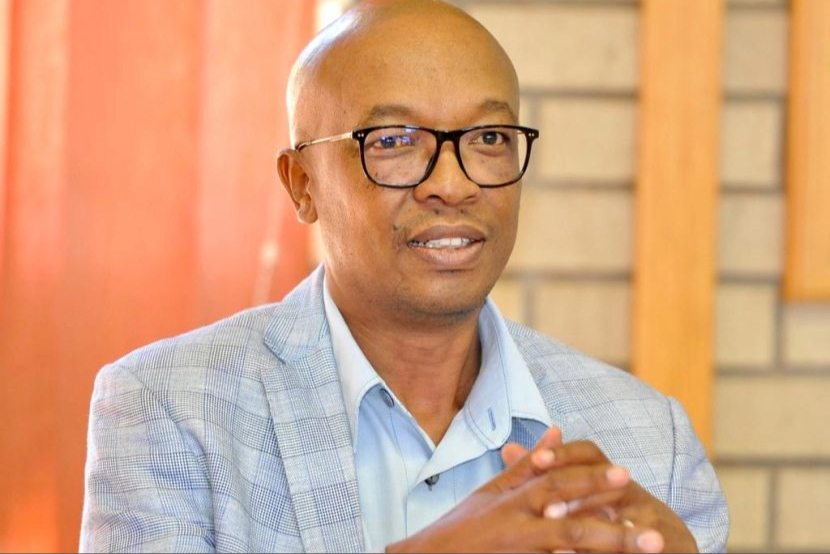
By Lehlohonolo Lehana.
Minister of Trade, Industry and Competition Parks Tau has assured South Africans that affirmative action policies like Broad-Based Black Economic Empowerment will not be scrapped.
Tau has been appointed to the position in the government of national unity (GNU) together with two deputies, Zuko Godlimpi, also of the African National Congress (ANC), and Andrew Whitfield, of the Democratic Alliance (DA).
The position was held by Ebrahim Patel, who retired at the end of his term, and debate regarding who would occupy the key economic portfolio was intense ahead of President Cyril Ramaphosa’s June 30 announcement, as it was offered to the DA before being withdrawn.
The Department of Trade, Industry and Competition (dtic) is responsible for a range of economy-shaping policies, including those seeking to redress racial imbalances that persist in the business enviroment, and it also has implementation responsibilities, through various agencies, in areas as diverse as industrial financing and company registrations, to standards and competition enforcement.
Tau was speaking to the media on the sidelines of the two-day Cabinet Lekgotla at the Sefako Makgatho Presidential Guest House in Pretoria.
BBBEE has been critisized as a failed policy that only managed to empower a few connected South Africans at the expense of the majority.
But Tau says there are lessons that were learnt from this empowerment programme.
“The question is what do we do going forward? Of course, we need to look at the next wave of [BBBEE]…where there are lessons to be learnt, we take those lessons into account and where there are greater opportunities to be introduced we need to be able to introduce those.
“We have placed this firmly on the agenda of the programmes that would be driven by this administration and that is why we always say we are focussing on industrialisation, but we are equally focussing on transformation, “he said.
The Minister emphasised that the economic growth and development of South Africa is a key priority.
A key priority for the seventh administration will be to “leverage off the back of Operation Vulindela as a key programme”.
“This would be a focus on network industries amongst others…looking at energy, looking at logistics in particular, the digital economy and other areas. The fact that we’ve made significant progress in that regard enables us to use that as a springboard to grow the economy focussed on industrialisation and re-industrialisation.
“But also, a deliberate and conscious focus on transformation because of course, this will enable us to broaden the base of entrepreneurs in the country [and] to broaden the base of participants in the economy of this country and enable us to grow the jobs that this country so much needs,” Tau said.
Meanwhile, Small Business Development Minister Stella Ndabeni-Abrahams said there will be a new funding system for small businesses that will include the private sector.
The Minister presented R2.4 billion budget on Friday.
Ndabeni-Abrahams said there is a new design for such funding.
“In order to access an early-stage investment, we will be tabling this policy in this quarter. The policy will be a game changer as it establishes the funds of funds which we are currently designing. The fund will derisk and leverage from the private sector and institutional support amongst other things. We will also prioritse a startup policy and legislation as required and this will be done will relevant departments.”
The Minister also said the department is focussing on five areas related to market access and localisation, which have proven to be barriers for SMMEs.
“Firstly, we will support 200 SMMEs through our Small Business Exporter’s Development Programme to participate in ten trade events in the 2024/25 financial year. In this regard, R20 million has been allocated to exploit our AFCFTA, BRICS partnerships and various global trade agreements.
“Second, we will enhance our Market Linkage Programme to ensure placement of SMME products in strategic warehouses of wholesalers and the shelves of retailers. Through our partnership with Proudly SA, we are developing an e-commerce platform that is likely to go live in the second of this financial year.
“Third, we are working with the public sector in order to exploit opportunities which will be presented by the Public Procurement Bill (once signed into law). We are working with corporates through Community of Practice to influence Enterprise and Supplier Development (ESD) programmes and procurement of products from small enterprises and cooperatives,” she said.
Furthermore, there are plans to “actively building supplier capacity to meet and sustain the market requirements”.
“Here we provide quality improvement, product testing and certification, as well as productivity improvement through the Small Enterprise Development Agency (Seda).
“Through the Small Enterprise Manufacturing Support Programme (SEMP) at the Small Enterprise Finance Agency (Sefa) we have allocated an amount of R266.8 million which deepens the black industrialist programme and ensure more participation of small enterprise in the manufacturing sector.
“Fifth, priority is also given to new growth drivers with low barriers to entry. In this financial year (2024/25), we will focus on the energy sector and tech industry – while also implementing our Cannabis Support Programme that will look both at the industrial hemp value chain as well as how to mainstream small indigenous cannabis growers for lucrative markets,” Ndabeni-Abrahams said.