
By Lehlohonolo Lehana.
South Africa is going to approach the United Nations Security Council to intervene in Gaza, as fighting in the region continues despite an International Court of Justice (ICJ) ruling.
On Friday, the ICJ ruled in favour of South Africa and ordered Israel to limit harm to Palestinians in the region. It also ordered a report from Israel on steps it had taken within a month.
The court ordered Israel, amongst others, to take all measures within its power to prevent the commission of genocide and to immediately ensure that Palestinians have access to basic services and humanitarian assistance.
The ICJ also found that it was “plausible” that Israel committed acts which violate the Genocide Convention.
Israeli forces continued to conduct attacks in the area over the weekend, seemingly in defiance of the order.
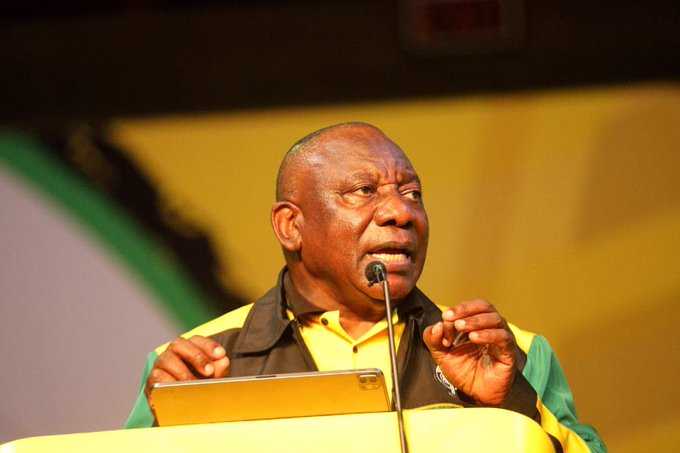
Speaking at the closing of the ANC’s National Executive Committee and start of its Lekgotla on Monday, president Cyril Ramaphosa said SA would now approach the United Nations Security Council.
“The next step will see us turning to the structures meant to oversee this [the court’s orders], starting with the United Nations Security Council and other agencies.”
He repeated his call for the Council’s reform and said the country will now look for support from other nations.
“It must become a forum where all have an equal voice. Where the interests of all have equal weight.
“Our work to stop genocide in Palestine will therefore not just continue in the International Court of Justice, where we are now preparing the case on the merits to show proof of genocide, it must and will continue on the political front at the UN and seeking practical support.”
In his weekly letter, Ramaphosa reaffirmed the country’s obligation to stand up for justice and fundamental human rights for all people.
“It is this obligation that informed our application to the ICJ to halt the violence unleashed by Israel on the Gaza Strip. The Genocide Convention was unanimously adopted by the UN General Assembly in the immediate aftermath of the Holocaust, one of the worst crimes in modern history,” he said.
Referring to the world witnessing the mass extermination of 6-million Jews and millions of other victims of the Nazis, Ramaphosa said the world united to prevent such atrocities from occurring again.
“As a signatory to that convention, South Africa carries a responsibility, like other states that are signatory to the convention, to prevent acts of genocide wherever they occur. It was in fulfilment of this responsibility and to prevent further civilian deaths and destruction that South Africa took this case to the court.”
Ramaphosa indicated the lekgotla would discuss issues such as ANC renewal, transforming the country’s economy, energy crisis and load shedding as well as gender-based violence (GBV).
He said the ANC was focused on building “a safe and secure environment for all South Africans”.
“This requires capable, sophisticated and independent law enforcement agencies which can fight complex and organised crime as well as great attention being paid to the socio-economic determinants of crime as part of an effective prevention strategy,” he told ANC NEC members.
The ANC president stressed that government must work for the people and highlighted the importance of the public sector’s role in service delivery.
He pointed out the ANC has made progress in reducing poverty and expanding basic services to more people across the country.
Ramaphosa also said the strengthening of law enforcement agencies was one of the measures that has been taken to improve the lives of citizens.
Ramaphosa added: “A capable developmental state will not be possible without insisting on accountability across all parts of the state, and indeed across all institutions of the society.
“It should be that any person who is given a task in the service of our people must perform that task diligently and to the best of their ability. They feel bound by the responsibility they have been given and must be prepared to face the consequences of poor performance or even any actions of impropriety or malfeasance.”
Furthermore, Ramaphosa highlighted how local government was a vital part of a capable state.
“Yet many municipalities continue to experience financial as well as operational crises. Bold and urgent intervention is needed to improve local government service delivery. To date, interventions have been desperate and poorly coordinated with limited effect.”
Watch Live in the video below:
Video Courtesy of MYANC.