
By Estea Rademeyer, Sports Journalist.
South Africa turned the second Test against Australia on its head on day three, recovering from 110 for six to declare on 429 for nine at St George’s Park.
Temba Bavuma’s career best 179 anchored the innings, while Marco Jansen and Simon Harmer made crucial half centuries to put the hosts in a position to challenge for a series levelling victory.
Australia, who won the first Test in Durban by 214 runs, closed on 3 for one in their second innings, still 422 runs behind. Kagiso Rabada removed Nic Maddinson for a four ball duck in the opening over before Travis Head and nightwatchman, Scott Boland survived the remaining three overs against spin in fading light.
Bavuma’s 179 from 334 balls was his first Test century against Australia and the highest score by a South African captain against the tourists. He reached three figures from 226 deliveries with a powerful pull, off Pat Cummins, having resumed the day on 41. His innings gave South Africa a platform after their top order had struggled against Australia’s pace attack.
The captain’s work was supported by Jansen, whose 85 came in a counterattacking stand of 132 with Bavuma. Jansen took on Starc and Boland with an array of drives and pulls, including several sixes, as South Africa began to wrest control of the scoring rate. He was eventually dismissed by Boland, clipping the ball to midwicket where Head held a sharp catch.
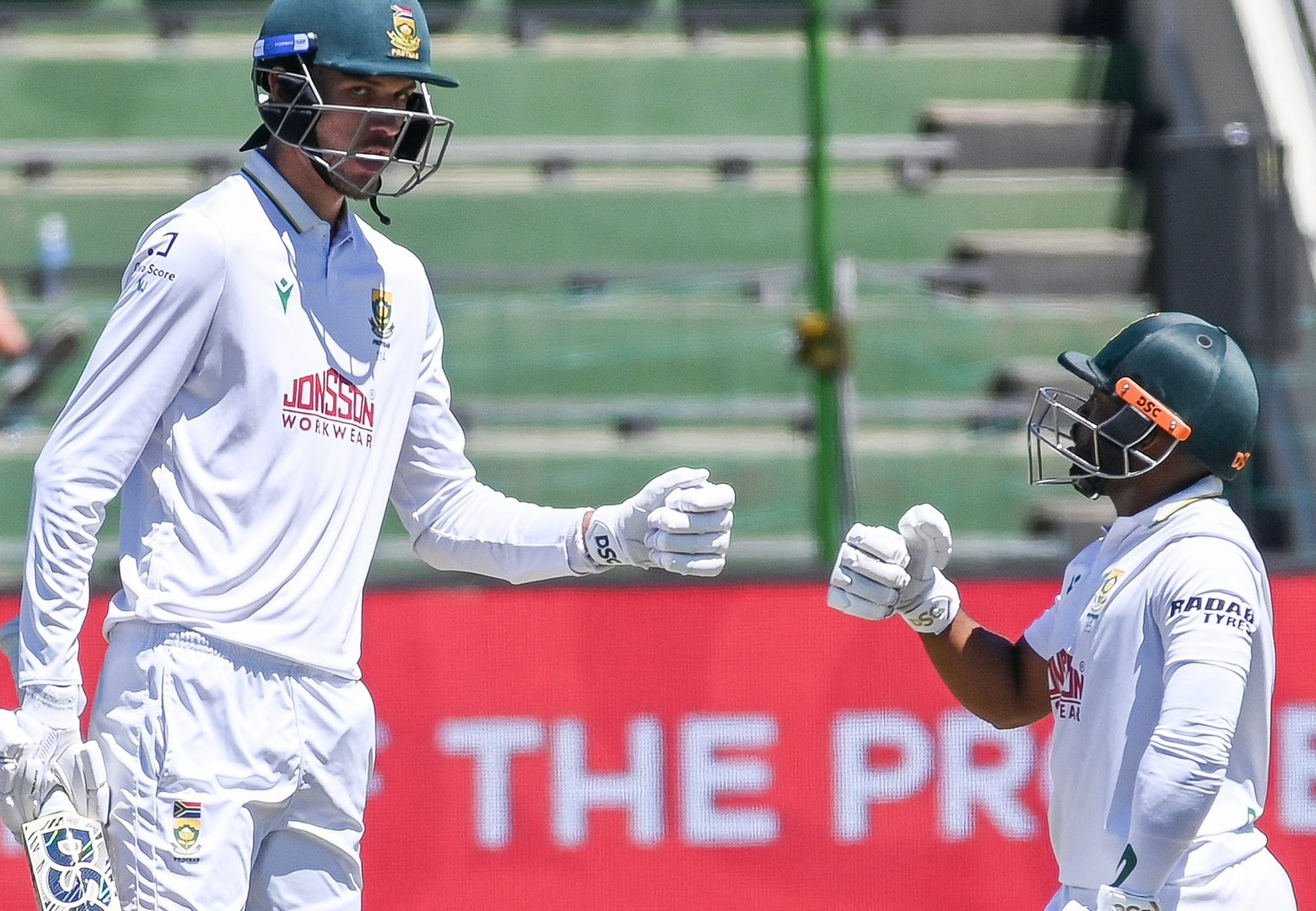
Harmer then joined Bavuma for a record South African eighth wicket partnership of 183. His 82, scored from 116 balls for his maiden Test fifty, helped extend the innings deep into the final session. Harmer showed sound judgement against the second new ball and was prepared to attack when Australia offered him opportunities, but fell short of a maiden Test century after missing a sweep against Marnus Labuschagne.
Australia’s attack faced a long day in the field. Boland finished with five for 81 and Starc took three for 89, but the visitors were unable to prevent South Africa from building two century partnerships after the fall of the sixth wicket. Josh Hazlewood, who had been absent during the morning session, bowled only nine overs in the day as the workload fell heavily on the other quicks.
The recovery was particularly significant after South Africa had been reduced to 20 for two on the rain affected opening day and had lost six wickets for 110. Bavuma’s composure and the lower order partnerships ensured that Australia’s early advantage was largely erased.
Speaking after play, Bavuma said he had not felt the conditions had become easy for batting. The new ball, he explained, continued to pose a threat at St George’s Park, while Australia’s quality attack could maintain pressure through disciplined lengths and fields. His own approach, he said, had been to remain tight in defence, play straight and sustain that plan for as long as possible.
“I’m happy that I was able to get one against Australia in Test cricket,” Bavuma said afterwards. He acknowledged that his century at Newlands would always hold a special place, but this innings had its own significance. He had helped pull the team out of a difficult position while also addressing a personal frustration: the struggle to convert starts into a major score.
“I was able to get the team out of a tough situation, but then from a personal point of view to go and get a big hundred,” he said. “That’s obviously something that’s been a thorn in my batting career, so it was nice to mentally get over that.”
South Africa declared when Bavuma was dismissed, with just over 20 minutes left in the day. The decision carried some risk, particularly as the light was fading, but Rabada’s strike in the first over gave the hosts an immediate return.
With two days remaining, South Africa need to make full use of the advantage created by their recovery. Bavuma said the team would need to spend much of the remaining time in the field if they were to force a result, adding that there was still enough in the surface, particularly with the new ball, to trouble Australia’s batters.
The hosts have moved from a position of serious danger to one of genuine opportunity. Whether they can turn that opportunity into a win will depend on the bowlers sustaining the pressure that Bavuma and his partners worked so hard to create.