
By Rebecca Atherstone.
With all the hype surrounding artificial intelligence (AI) it is unsurprising that fearmongering has taken root. Just recently, it was reported that former leading AI company Anthropic’s staff are frightened for humanity’s future. No conversation about humanity’s future can exclude children and so naturally the fears have carried over to education.
Some of that fear, it turns out, is justified. At the start of this month, world-renowned scientific journal Nature published an article which revealed the problem has reached such concerning levels that universities are hiding “Trojan horse” prompts in assignments and redesigning exams that chat bots cannot pass. Why? Because they can no longer trust the work that is submitted.
In one 2026 Survey conducted by Oxford in the UK, 94% of undergraduates said they use generative AI to help them with their assessed work. That’s university. What about school? According to the Stanford AI Index Report, four out of five American high school and college students use AI for school-related tasks, while only about half of middle and high schools in the US have any AI policy in place.
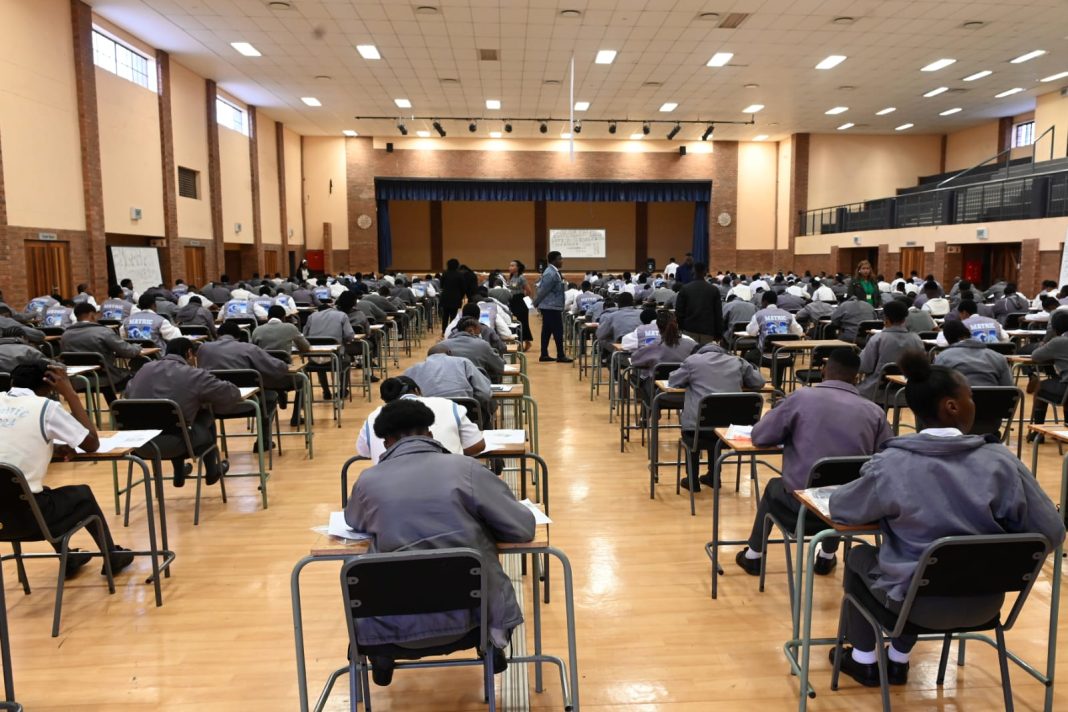
Turning the lens towards South Africa, matric prelims are underway, with finals looming. Learners in lower grades are gearing up for the year’s final stretch before they write their end-of-year exams. AI is ever present, as confirmed by South Africa’s Minister of Education Siviwe Gwarube. Earlier this year, she wrote an opinion piece saying the country must not “drift” into classroom AI. She wrote that using AI poorly encourages shallow learning, erodes academic integrity, compromises privacy and deepens inequality.
The minister was also cautiously optimistic, writing: “SA should not be anti-AI. But we must be firmly against unintentional AI. If we get this right, AI can help us build a stronger, more responsive and inclusive education system. It can give teachers time back. It can support pupils more effectively. It can improve access.”
Award-winning AI pioneer and founder of multilingual AI tutoring platform HelloAida.ai, Leora Hessen, says: “I saw my own daughter’s critical thinking erode when she started using generic AI, while my domestic worker’s granddaughter was being taught in English while her home language is Afrikaans. Without access to an affordable home-language tutor, she was failing maths. It was evident that there was a gap for a curriculum‑aligned, multilingual AI assistant that protects critical thinking and supports teachers.”
Banning AI is not the solution, says Hessen. Learners with data will keep using whatever answers the fastest. Learners without a tutor, which is the vast majority, will use whatever is free. The choice is not AI or no AI, she argues. The choice lies in whether a platform is built for the South African curriculum, or leaves children exposed to the open internet and inherent biases and AI hallucinations.
The truth is that generic chatbots were not built for a Grade 10 additional-language learner. They are trained on the public web. South Africans saw recently with the furore surrounding the country’s national AI policy document that AI tools hallucinate sources, and this is often missed.
Importantly, generic large language model (LLM) platforms do not know the sequence of the South African curriculum, the pitch of an end-of-year paper, or how a concept is examined in November. They are optimised to be helpful. Importantly, when learners who are tired and may be desperate to finish assignments input data into the LLMs, schools and families simply do not know how much personal information has been inputted or where that data goes, which is a serious data privacy concern.
“The question isn’t whether AI will or should be in our learners’ lives. That horse has bolted,” says Emma Sokolsky, educational psychologist and Head of Education at HelloAida. “The real question educators and parents should be asking is whether we give them responsible, curriculum-aligned tools, or leave them to experiment with global chatbots that were never built for South African schoolchildren.”
Sokolsky says that a responsible platform must be constrained to vetted, syllabus-aligned material. It should not have the ability to scrape the web, she says, and it must move when the curriculum moves. “Teachers must see the well it drinks from, and it must be cheating-resistant by design. You want a tool that helps a learner grasp the steps and the reasoning. You don’t want a tool that does the thinking, it should encourage the learner to work through problems.”
Hessen adds that one of the most exciting consequences of education technology for a country like South Africa where there is a growing gap between those with and without the means for additional tutors, is that it democratises access to quality support.
“Most households cannot afford a private tutor, nevermind a tutor that can engage a learner in his or her home language. A tool that completes a worksheet or question for a learner does not close the education gap. On the other hand, a curriculum-constrained tutor, that is available at times that suit learners in a language they actually speak, can bring the type of individualised support that many take for granted into thousands of more households.”
Mpho Hlalele is a change management specialist who heads up responsible AI at HelloAida. She says it is critical for teachers and schools to understand that responsible tools are not there to replace them. “Teachers aren’t competing with AI, they’re competing with each other. The ones who start using well‑governed tools now will be better off than those who resist, because they’re there to support them in the classroom, not replace them.”
In her opinion piece, Minister Gwarube asked the system to enable innovation and protect the integrity of learning at the same time. Increasingly, it is apparent that one of the ways this will be achieved is through appreciating that the AI that belongs in a South African classroom is the one that is locked inside the curriculum, auditable, built for children, and structurally unable to replace children’s thinking.