
By Lehlohonolo Lehana.
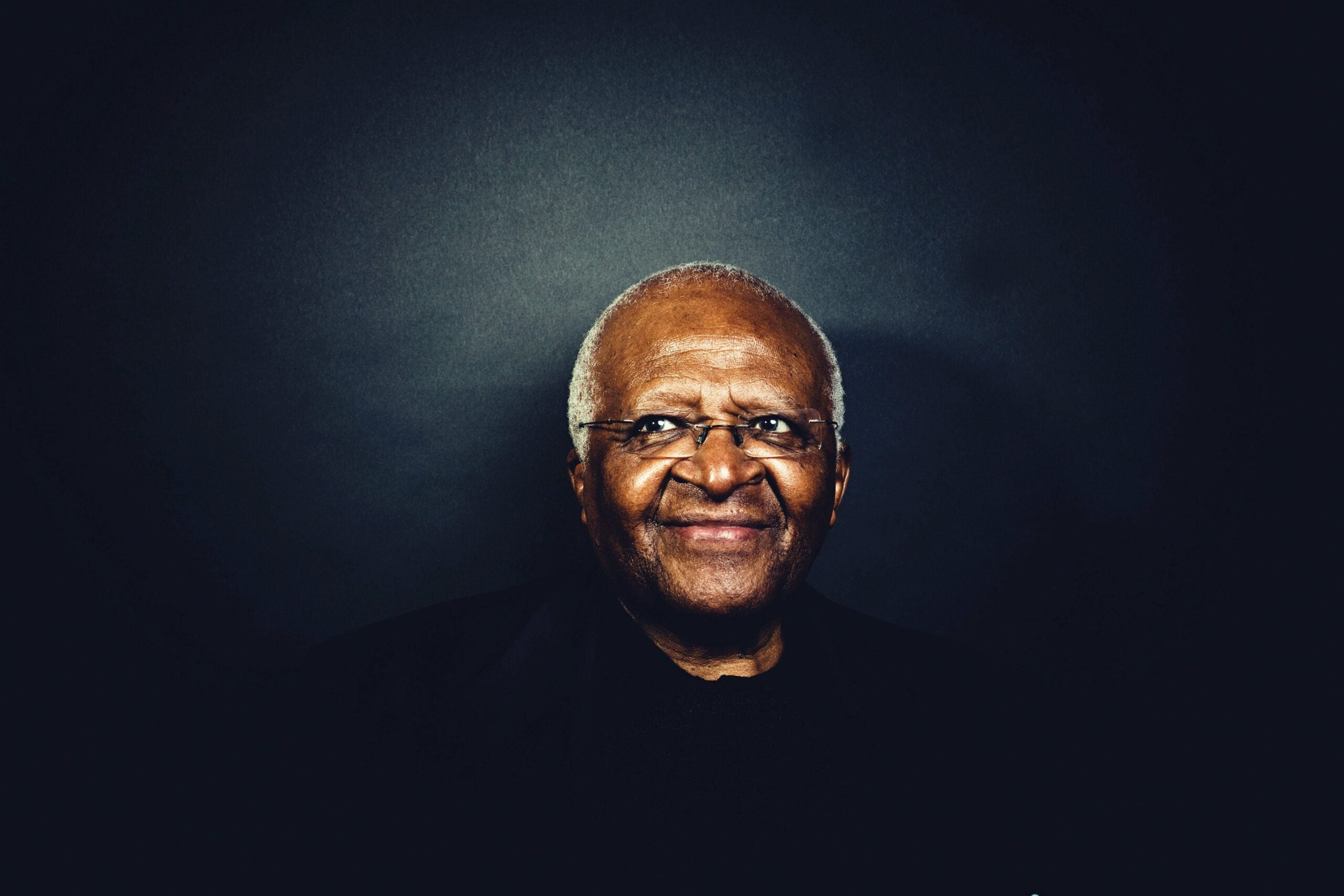
Photo Credit: Stephen Voss.
Tributes for Desmond Tutu began to flow soon after his death on Sunday morning with the Archbishop of Cape Town Thabo Makgoba lauding the clergyman for his moral strength, moral courage and clarity.
Makgoba said in a statement that the church will plan Tutu’s funeral and other memorial services with the support of the government and the city of Cape Town which will be held in accordance with Covid-19 regulations.
He said prayer, the scriptures and his ministry to the people God had entrusted to his care were at the heart of Tutu’s life.
“He believed totally that each one of us is made in the image of God and ought to be treated as such by others. This belief was not reached through cerebral contemplation; it arose from his faith and was held with a deeplyfelt passion. He wanted every human being on earth to experience the freedom, the peace and the joy that all of us could enjoy if we truly respected one another as people created in the image of God.”
President Cyril Ramaphosa in announcing the news described Tutu as an iconic spiritual leader, anti-apartheid activist and global human rights campaigner.
“The passing of Archbishop Emeritus Desmond Tutu is another chapter of bereavement in our nation’s farewell to a generation of outstanding South Africans who have bequeathed us a liberated SA. Desmond Tutu was a patriot without equal; a leader of principle and pragmatism who gave meaning to the biblical insight that faith without works is dead.”
A man of extraordinary intellect, integrity and invincibility against the forces of apartheid, he was also tender and vulnerable in his compassion for those who had suffered oppression, injustice and violence under apartheid, and oppressed and downtrodden people around the world.
Ramaphosa noted that as chairperson of the Truth and Reconciliation Commission Tutu had articulated the universal outrage against the ravages of apartheid and “touchingly and profoundly” demonstrated the depth of meaning of ubuntu, reconciliation and forgiveness. In the democratic dispensation he had remained true to his convictions and held the leadership and burgeoning institutions to account.”
In his richly inspiring yet challenging life, Desmond Tutu overcame tuberculosis, the brutality of the apartheid security forces and the intransigence of successive apartheid regimes. Neither Casspirs, teargas nor security agents could intimidate him or deter him from his steadfast believe in our liberation.”
The Nelson Mandela Foundation has described the loss of Archbishop Emeritus Desmond Mpilo Tutu as immeasurable.
In a statement on Sunday, the foundation said: “He was larger than life, and for so many in South Africa and around the world his life has been a blessing. His contributions to struggles against injustice, locally and globally, are matched only by the depth of his thinking about the making of liberatory futures for human societies. He was an extraordinary human being. A thinker. A leader. A shepherd.
“The Arch meant everything to me,” said Foundation Chief Executive Sello Hatang. “I first met him during the work of the Truth and Reconciliation Commission, and was privileged to work with him on a number of projects over the years. He was a friend to Madiba and to the Foundation.”
Nelson Mandela and the Archbishop Emeritus first met at a debating competition in the early 1950s. It would be four decades later before they met again, on the day that Mandela was released from prison. His first night as a free man was spent at the home of the Tutus in Bishopscourt, Cape Town. On that occasion before everyone retired for the night, Tutu offered a prayer of thanksgiving and led a singing of Reverend Tiyo Soga’s famous hymn in isiXhosa, ‘Lizalis’idinga lakho’ – ‘Let your will be done’.
The apartheid state had frustrated attempts by both Mandela and Tutu for the two of them to meet before the prison release on 11 February 1990. From then until Mandela passed away in 2013 they were in regular contact and their friendship deepened over time. There was a light, almost teasing quality, to their relationship. They relentlessly poked fun at each other’s preferred attire, for instance – Mandela wearing his Madiba shirts and the Arch his robes. But they also collaborated on a number of important initiatives.
It was Tutu who held aloft Madiba’s hand on the balcony of Cape Town’s City Hall on 9 May 1994 and presented him to the assembled throngs as the country’s new “out of the box” President. In 1995 Mandela appointed him to chair the country’s Truth and Reconciliation Commission, a position Tutu used to drive endeavour to reckon with oppressive pasts but also to hold the new democratic government accountable. As Mandela reflected in that period: “His most characteristic quality is his readiness to take unpopular positions without fear … He speaks his mind on matters of public morality. As a result, he annoyed many of the leaders of the apartheid system. Nor has he spared those that followed them – he has from time to time annoyed many of us who belong to the new order. But such independence of mind – however wrong and unstrategic it may at times be – is vital to a thriving democracy.” Most recently, of course, Tutu spoke out robustly and insistently against state capture.
In 2004 he delivered the Nelson Mandela Annual Lecture, and used the platform to deliver a stinging critique of the governing party. The thrust of his argument was the extent to which leadership had failed society’s most vulnerable. “We were involved in the struggle because we believed we would evolve a new kind of society. A caring, a compassionate society. At the moment many, too many, of our people live in gruelling, demeaning, dehumanising poverty.”
Madiba and the Arch were both founding members of The Elders, an international grouping of inspirational leaders which has done human rights work in countries around the world.
“We owe it both to Madiba and to the Arch to continue working for the country and the world of their dreams,” said Hatang. “Their intersecting legacies are powerful resources for social justice work.”
When Nelson Mandela passed away in 2013, Archbishop Emeritus Tutu said: “This is a man who cared.” As the Foundation mourns today the passing of our beloved Arch, we in turn can say precisely the same of him. May he rest in peace
“Our thoughts are with his family and friends at this most difficult time.”