
By Lehlohonolo Lehana.
All prospective students who are approved for National Student Financial Aid Scheme (NSFAS) funding will be able to register for the 2023 academic year without having to pay a registration fee.
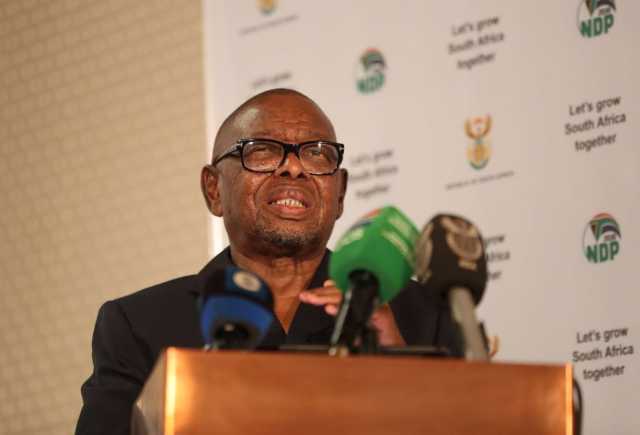
Speaking on Tuesday at a media briefing in Pretoria about the department’s readiness for the 2023 academic year, Nzimande said higher education was working toward developing an alternative funding model for university and technical vocational education and training (TVET) college students.
He said the department would present the model in Parliament after consultations with relevant stakeholders.
Nzimande said students who fell in the “missing middle” category were also a concern for the department.
Students in this category do not qualify for National Student Financial Aid Scheme (NSFAS) funding but cannot afford to pay TVET or university tuition.
“We will direct loans and bursaries and direct these efforts towards students located within the scarce skills category.
“We will also work with universities to say those students who are willing to acknowledge debt must also be admitted, hoping it is the last time we make these arrangements [before the new funding model comes into effect],” he said.
Nzimande said as of Friday the scheme had received more than 1.1 million applications, with 156 700 of the applicants already beneficiaries of the SA Social Security Agency (Sassa).
He said although this was a high number, it would likely decrease as not all applicants had passed matric.
Nzimande said Sassa beneficiaries who passed received funding approval.
He also mentioned that an inflation-linked increase of 5% on allowances had been effected for universities and TVET colleges on student allowances.
“The accommodation allowance has increased by 7% and was capped at R45 000 per student per annum. This year, a living allowance of R6 000 per annum, distributed monthly, will be introduced for the first time for our TVET college students,” he said.
Student debt at higher education institutions nationally stood at around R16.5 billion in January 2023.
NSFAS applications for funding for the 2023 academic year opened on 28 September 2022 and will close on 31 January 2023.
Covid-19 Omicron subvariant
Nzimande said the post-school education and training sector was working on a strategy to respond to the negative impact of load shedding and the resurgence of Covid-19 Omicron subvariant called XBB.1.5, nicknamed Kraken.
Several cases of the highly transmissible subvariant have been detected in South Africa since December 2022.
The minister said various universities across the country had adopted different strategies to deal with the impact of load shedding on teaching and learning.
He said both departments of higher education and science and innovation would establish a working group consisting of universities and TVET colleges to come up with an inclusive approach to deal with the challenge of the rolling blackouts.
“I will update the public on these efforts following the conclusion of our internal consultation processes as part of dealing with the negative impact of load shedding,” he said.
Regarding the management of Covid-19 in higher learning institutions, Nzimande said his department was also working with institutions to monitor and manage public health protocols, as advised by the Department of Health, to ensure the safety of students on campuses.
Over the last three years, Higher Health – our entity that is assisting us with staff student wellness in our institutions – has played an instrumental role within the context of both the policies of the Department of Higher Education and Training and the Department of Health towards putting in place protocols, procedures, systems and capacity to deal with the Covid-19 pandemic.
“All these instruments remain active should we need to apply them in response to this new variant,” said Nzimande.
Gender-based violence
The minister said his department had noticed a rise in case of gender-based violence (GBV) at higher learning institutions, and Higher Health would also assist in ensuring safe workplaces and learning spaces for staff and students.
The Department of Higher Education and Learning had also established a ministerial task team to fight sexual harassment and GBV in the universities.
The task team is chaired by the Vice-Chancellor of Nelson Mandela University Professor Sibongile Muthwa.
“The report of the ministerial task team was submitted to me for consideration and I will soon be realising it to the public,” said Nzimande.