
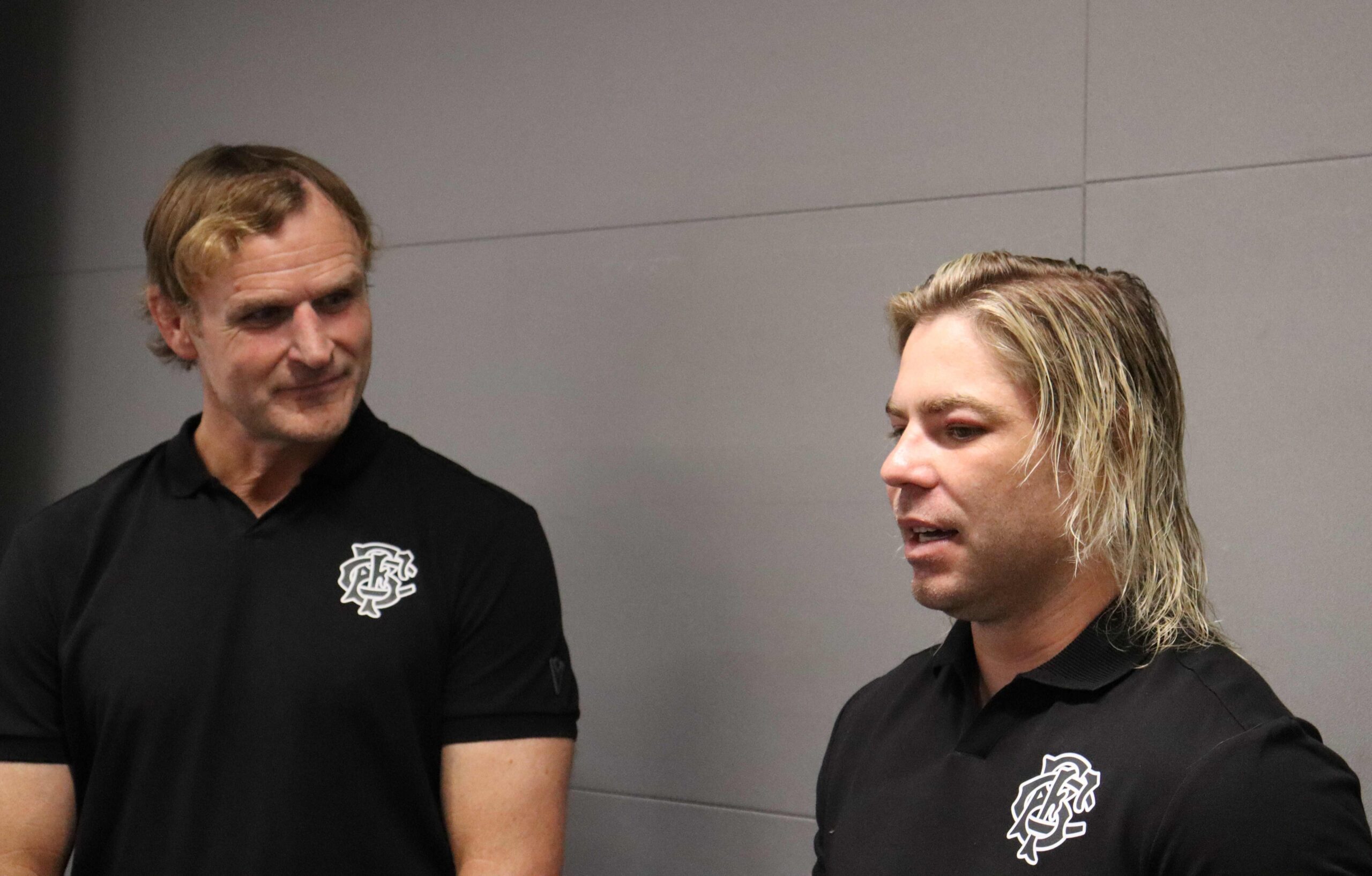
By Kevin Rademeyer at Allianz Stadium, Twickenham.
Photo Credit: Kevin Rademeyer/Fullview.
Allianz Stadium, London: Wales edged the Barbarians 33 to 31 at Twickenham on Saturday, but the scoreline told only part of the story.
Steve Tandy’s side secured successive victories for the first time since the 2023 Rugby World Cup, yet the performance exposed several areas that will concern the Welsh coaching staff with a daunting Nations Championship schedule fast approaching. After opening against Fiji, Wales travel to Argentina before the ultimate examination awaits in Durban, where the world champion Springboks will be waiting in just three weeks.
Against a Barbarians side assembled for entertainment rather than continuity, Wales produced moments of attacking promise but were equally guilty of basic handling errors, ill discipline and an inconsistent set piece. Those shortcomings would be punished far more ruthlessly by South Africa.
The Springboks will have watched with interest.
Wales conceded 14 penalties, turned over possession 16 times and struggled to dominate a Barbarians scrum led by Springbok prop Vincent Koch. While Dan Edwards crossed twice and the hosts eventually claimed victory, the match served more as a valuable training exercise than convincing evidence they are ready for rugby’s toughest challenge.
For South Africa, there was another familiar figure commanding attention. Double Rugby World Cup winner Faf de Klerk captained the Barbarians, leading an international invitational side packed with experience and physicality. The veteran scrumhalf, who remains determined to force his way back into Rassie Erasmus’ Springbok plans, relished the responsibility.
Speaking to Fullview after the match, De Klerk made it clear that his international ambitions remain firmly alive. “I want to perform for my club side because that’s where you get selected from,” De Klerk said.
“I will do everything possible to make the Free State better, for the team and myself personally, and improve in everything I can. I am fully going for that spot, but if they want to go a different direction, I’ll be supporting all the way.” Those words underline the fierce competition within South African rugby.
Even after more than a decade at the highest level and two World Cup winners’ medals, De Klerk accepts nothing is guaranteed in Erasmus’ squad, where depth remains arguably the strongest in world rugby.
On the field, he demonstrated the qualities that have defined his career. His relentless tempo, defensive aggression and ability to ignite counter attacks kept Wales under pressure throughout, while he later joked that the Barbarians pack was one of the biggest he had ever played behind, a remarkable observation from someone accustomed to operating alongside the Springboks’ formidable forwards.
The occasion also belonged to Welsh legend George North.
Playing the final match of a glittering career, North came off the Barbarians bench to score twice with trademark power, his first arriving with his very first touch. He fittingly had the last say as well, converting Santiago Arata’s late try to close the curtain on a career that delivered 121 Wales caps, four Six Nations titles and two British and Irish Lions tours.
His farewell provided the day’s loudest cheers. For Wales, however, sentiment now gives way to reality.
The Barbarians offered useful preparation, but the Springboks represent an entirely different proposition. South Africa’s relentless physicality, set piece dominance and tactical precision will punish the kind of errors Wales escaped on Saturday.
Tandy will welcome back several overseas based internationals before the Nations Championship, including Tomos Williams, Dafydd Jenkins and Louis Rees Zammit, but improvement will need to come quickly.
The countdown to Durban has already begun. If Saturday was about building confidence, the next three weeks will be about proving Wales are capable of surviving one of the toughest assignments in international rugby.