
By Lehlohonolo Lehana.
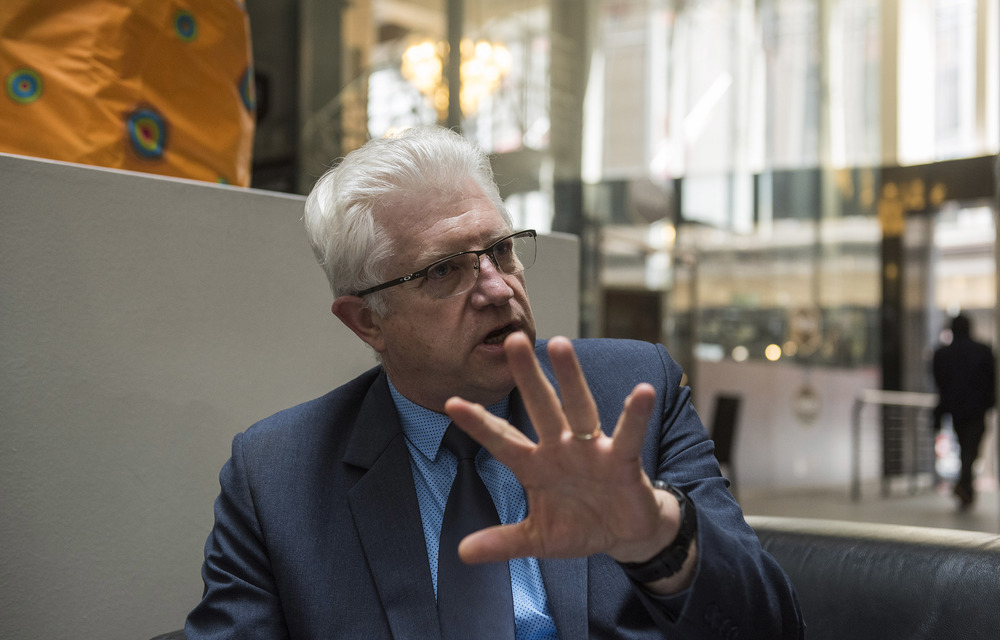
Western Cape Premier Alan Winde has expressed concern over a purported increase in hoarding of fuel stock by certain suppliers amid rising tensions in the Middle East.
Winde has written to the presidency and the office of the Minister of Mineral and Petroleum Resources, Gwede Mantashe regarding his concern over hoarding of fuel.
South Africa is set to feel these disruptions on 1 April, with petrol and diesel prices expected to increase by over R5 and R9 per litre, respectively.
Winde said that the increase in hoarding of fuel stock by certain suppliers is unethical.
“I implore suppliers to continue providing fuel for their clients. Withholding supply places economy and livelihoods, especially in the province’s agriculture sector, which accounts for over 50% of the entire country’s exports, at great risk.
“I have written to the President and Minister requesting their urgent intervention to ensure stability and prevent avoidable disruptions to primary sectors of our economy,” Winde said.
His office said that the letter would not be divulged publicly.
The premier added that the Competition Commission of South Africa has also indicated that price gouging is illegal.
He said that any provider increasing prices in advance of any actual fuel cost hike or increasing prices far more than their actual cost increases is at risk of being prosecuted and found guilty of price gouging. He said that these complaints should be submitted to ccsa@compcom.co.za.
“The Western Cape Government is aware of isolated incidents where filling stations in parts of the province are running short of fuel supply or have depleted their stocks and are unable to source certain fuel.”
“Residents are asked to submit reports on fuel shortages to the Department of Mineral and Petroleum Resources at fuel.complaints@dmpr.gov.za. Diesel supply appears to be the worst affected due to high demand, particularly in the agriculture sector,” Winde said.
Answering questions before the National Assembly, Mantashe said Iran has allowed safe passage through the Strait of Hormuz for ships from certain countries.
“I am sure if you monitor the news, you will appreciate that the Strait of Hormuz allows cargo that goes to South Africa without interruption,” Mantashe said.
“So, that means we have a chance to maintain a stable supply for a long period of time. There should be no panic in South Africa.”
Mantashe added that countries seeking to transport cargo safely through the Strait must meet two criteria set by the Iranian government.
Countries must not have an alliance or partnership with the United States or Israel, and they must pay the Iranian government in rials instead of dollars.
In spite of pressure from the United States to sever ties, South Africa’s longstanding relationship with Iran should allow it to continue operating within the Strait.
While this may not stem the tide of the expected price increases, it may potentially quell the expected fuel shortage, which has been a concern for many South African citizens.