
By Lehlohonolo Lehana.
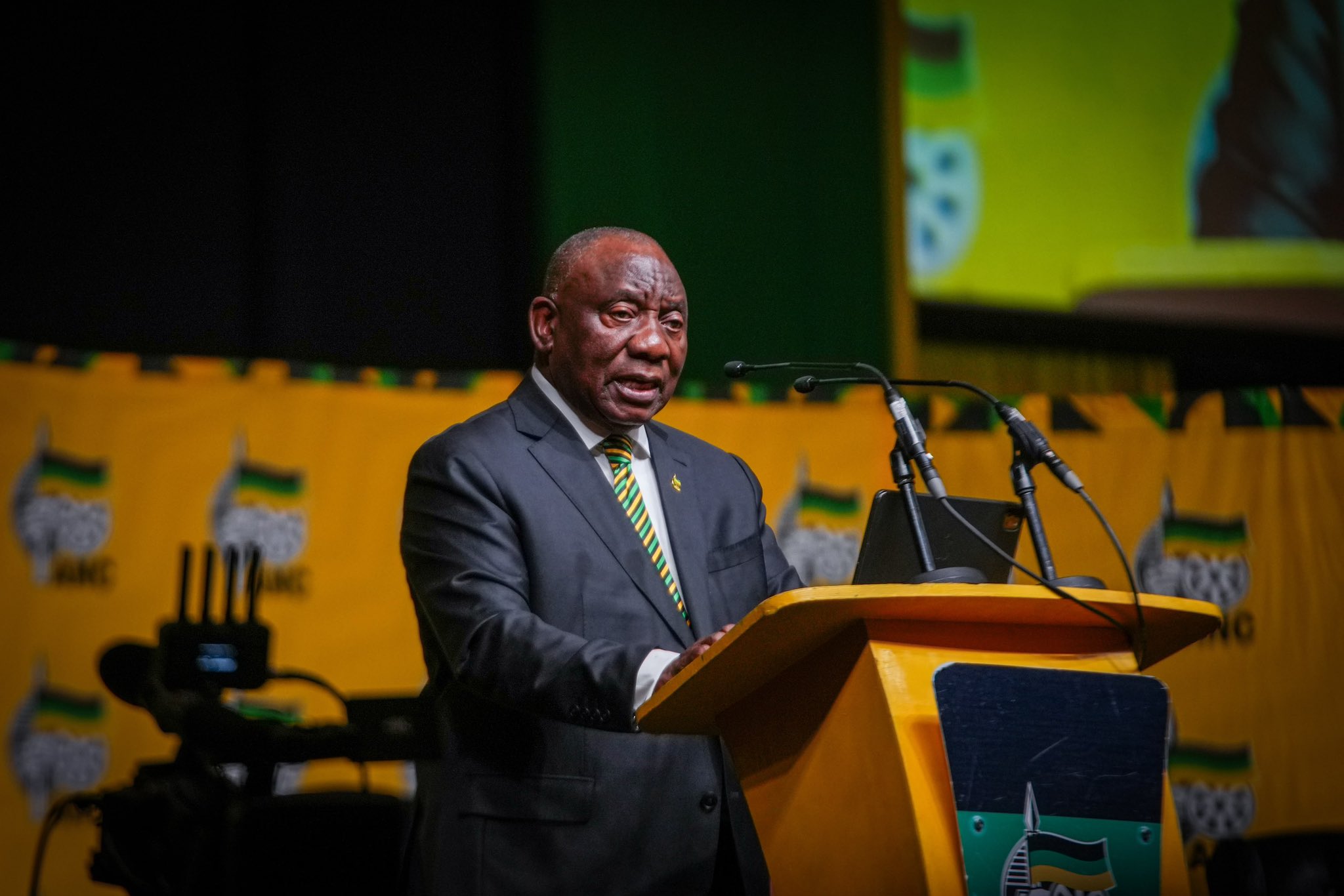
The African National Congress (ANC) president Cyril Ramaphosa says a free, unhindered press and an independent judiciary are the bedrock of South Africa’s democracy.
Ramaphosa met with South African editors and journalists ahead of the Local Government Elections on 4 November 2026.
On this day, 19 October 1977, the apartheid regime banned publications, including The World and Weekend World, and detained journalists, including The World editor Percy Qoboza, in an attempt to silence independent voices exposing the injustices and brutality of apartheid.
Qoboza was held without charge in Modderbee Prison for five months. His deputy, Aggrey Klaaste, and other World journalists were detained with him. It came barely five weeks after Steve Biko died in police custody, a death The World had refused to let the country forget.
Ramaphosa paid tribute to the journalists who risked their freedom and livelihoods to expose the injustices of the apartheid regime.
He said an independent media is essential to protecting South Africa’s constitutional democracy.
“And as for you, as journalists, we uphold the work that you do. We commemorate a day like this and remember the journey that you have traversed. You traversed a very difficult journey in South Africa, but today, for us to be noted as 21 out of 180 countries on the World Press Freedom Index is a really good accolade.”
Ramaphosa said declining advertising spend to support independent media is impacting the media’s ability to survive in a rapidly changing landscape and led to the closure of numerous community and African-language publications.
He also said Artificial Intelligence (AI) offered extraordinary possibilities for journalism, government and organisations, but warned that its misuse could threaten public trust and democratic processes.
For South Africa, he said, AI could help journalists analyse large volumes of information, identify patterns, translate content into different languages and make information more accessible to audiences.
These capabilities could be particularly significant in a country with 12 official languages, where access to information across linguistic communities remains an important consideration.
However, the president cautioned that the same technology could be used to manufacture convincing but false content, with potentially serious consequences ahead of the November 4 local government elections.
The president also condemned the harassment and intimidation of journalists, particularly women who face threats and abuse on digital platforms.
He said political leaders had a responsibility to condemn such conduct unequivocally, including when perpetrators claimed to support their own organisations.